


Ethereum's technology keeps getting better, checking off milestone after milestone on the project's roadmap. Meanwhile, the token has lost more than 60% in value since last August.
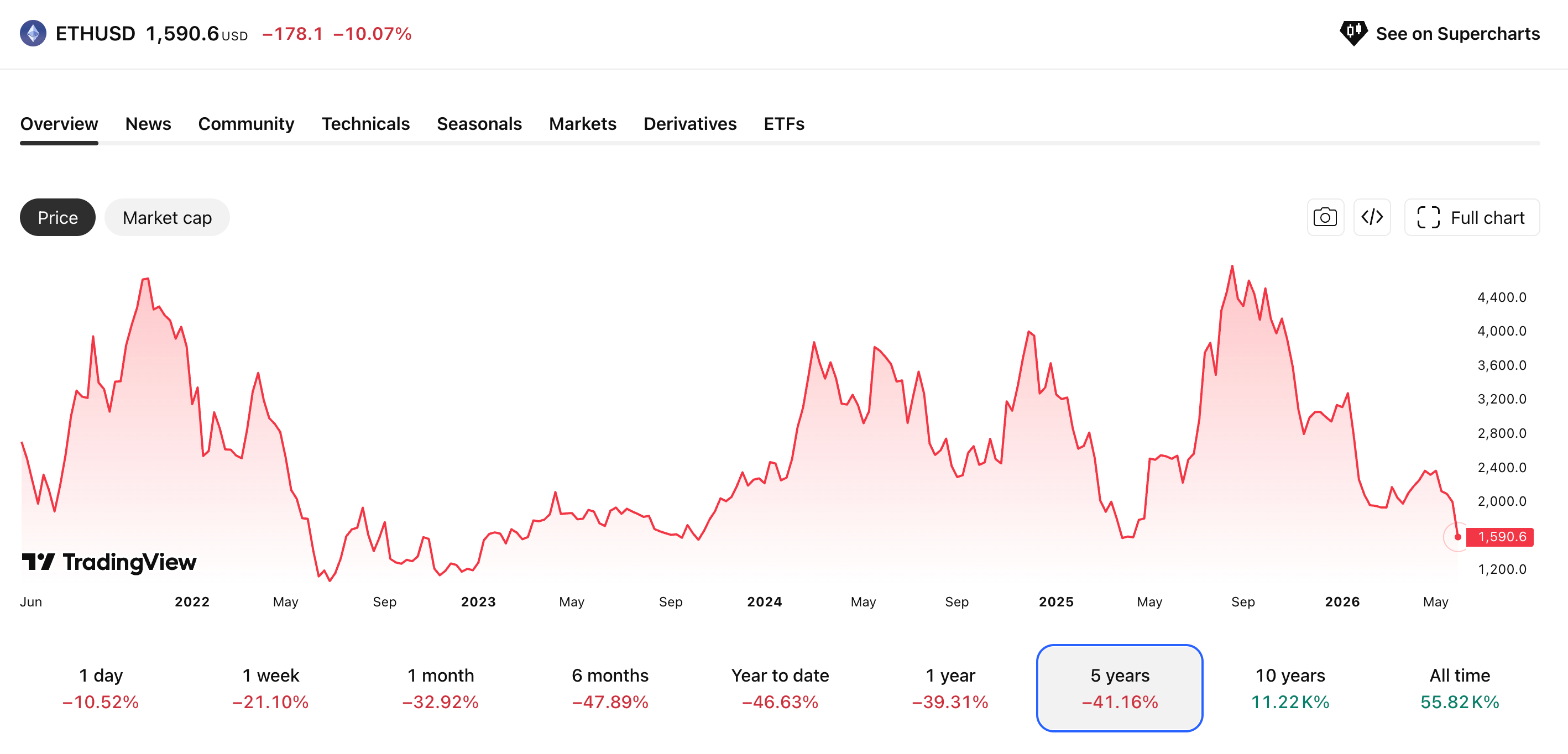
On June 6, ETH briefly touched $1,505 intraday - its lowest price since early 2023.
While this is partly tied to a broader market dip, with Bitcoin dropping below $60,000 and triggering massive liquidations, Ethereum is facing its own unique headwinds.
The ETH/BTC ratio just hit a one-year low, major ecosystem players are dealing with layoffs and executive departures, and recent statements from Vitalik Buterin have sparked even more debate about the network's direction.
We pulled the latest data, the sharpest analyst takes, and the most relevant on-chain signals to map out what could realistically happen with ETH through 2026 and beyond.
Disclaimer: This article is for informational purposes only and does not constitute investment advice or a recommendation to buy or sell crypto assets. Any views, opinions, or forward-looking statements reflect current market sentiment and publicly available information and should not be relied upon as a basis for investment decisions.
Source: TradingView
ETH is now trading around $1,590.
It’s down over 40% from its ATH of nearly $5,000 reached in August 2025.
Spot Ethereum ETFs posted 13 consecutive sessions of net outflows heading into June, with roughly $694 million pulled across May.
The market mood, for now, is cautious.
Price and Ethereum network live different lives.
The network is in pretty good shape. Around 30% of ETH circulating supply is currently staked.
Corporate treasury holdings have grown from under 1 million ETH in mid-2025 to over 6.2 million ETH by early 2026.
The Glamsterdam upgrade, the next huge milestone on ETH roadmap, is planned for H1 2026. It will reorganize how the network processes transactions and reduce gas fees.
And the token... Well, the token is a harder sell right now.
Institutional ETF flows are net negative. Whale wallets are accumulating: addresses holding at least 100,000 ETH now control about 22% of supply, but retail sentiment doesn’t feel the same way.
The difference between how the network is doing and what’s happening with the price is where most of the 2026 ETH contradiction lives.
The hottest ETH debate right now is about whether the network's success means anything for the token.
Bankless co-founders split on this publicly in May 2026, and both put skin in the game.
Ryan Sean Adams held his ETH and drew a hard line:
"There is no strong Ethereum without an ETH worth trillions. Without ETH as a global store of value, Ethereum is a failed project. Full stop."
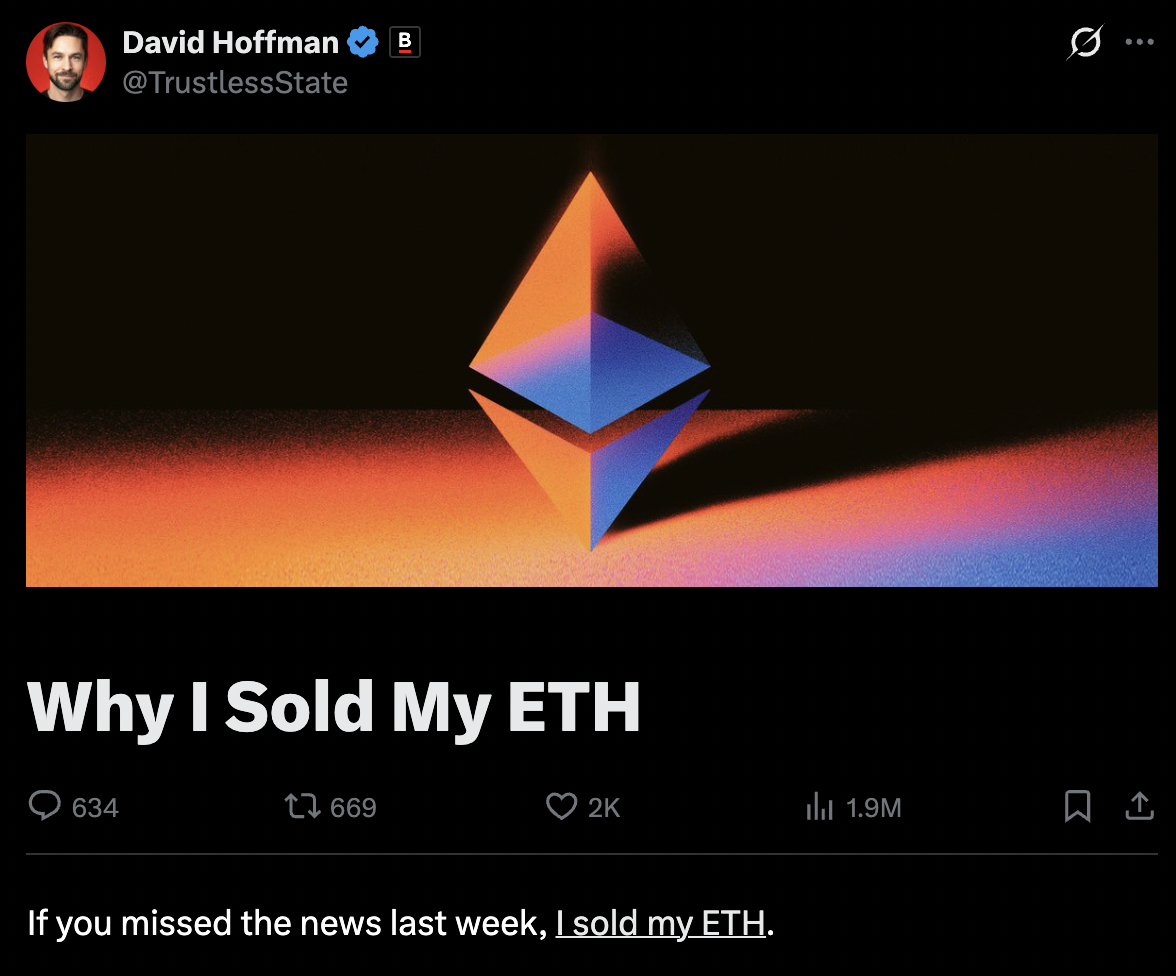
David Hoffman defended the asset despite selling his entire position after nine years of holding. And he claims it wasn’t a bearish move.
"The ETH is Money thesis didn't fail… it played out. Ethereum got the ETH price it deserves, and I don't see ETH being re-rated as an asset, higher or lower. P.S. I am massively bullish Ethereum. I expect Ethereum as a network to do exceptionally well from here on out. I think only a marginal amount of that success will be reflected in ETH."
 Source: David Hoffman on X
If this doesn’t sound very bullish to you, well, that’s because David is bullish on the tech, and not on the token.
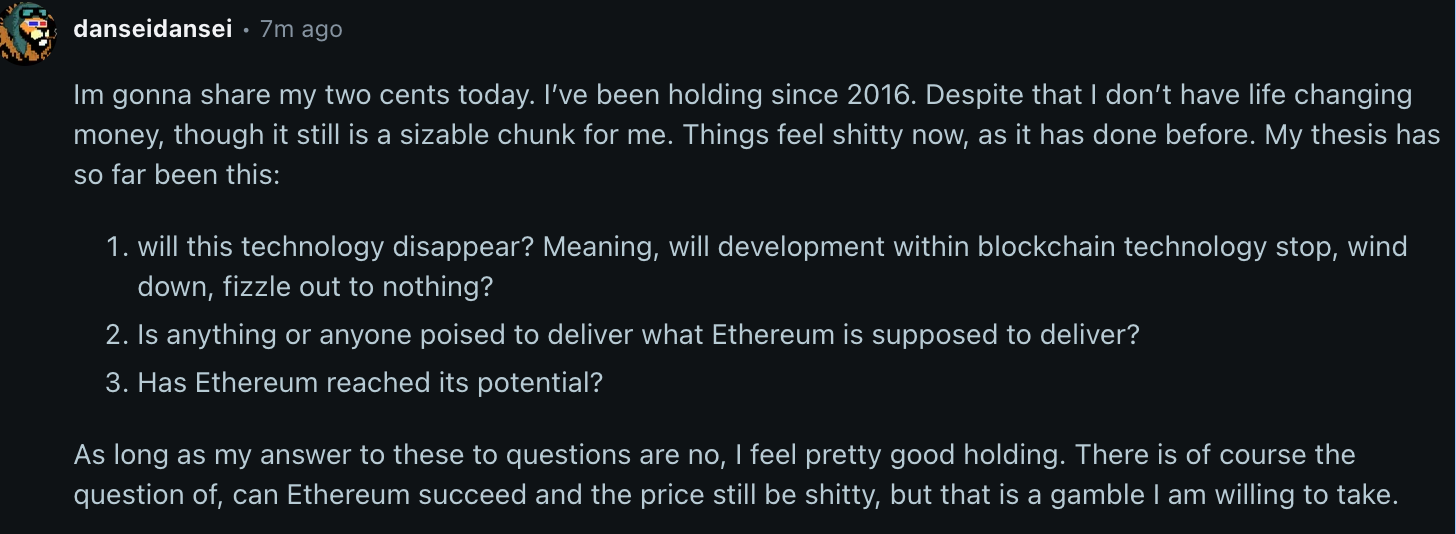
Meanwhile on Reddit, long-term holders are running a simpler version of the same stress test: is the technology going away? Is anything clearly poised to replace it?
For most, the answer is still no, and that's enough to hold, even if the price isn't cooperating.
 Source: r/Ethereum on Reddit
Three metrics worth paying attention to right now:
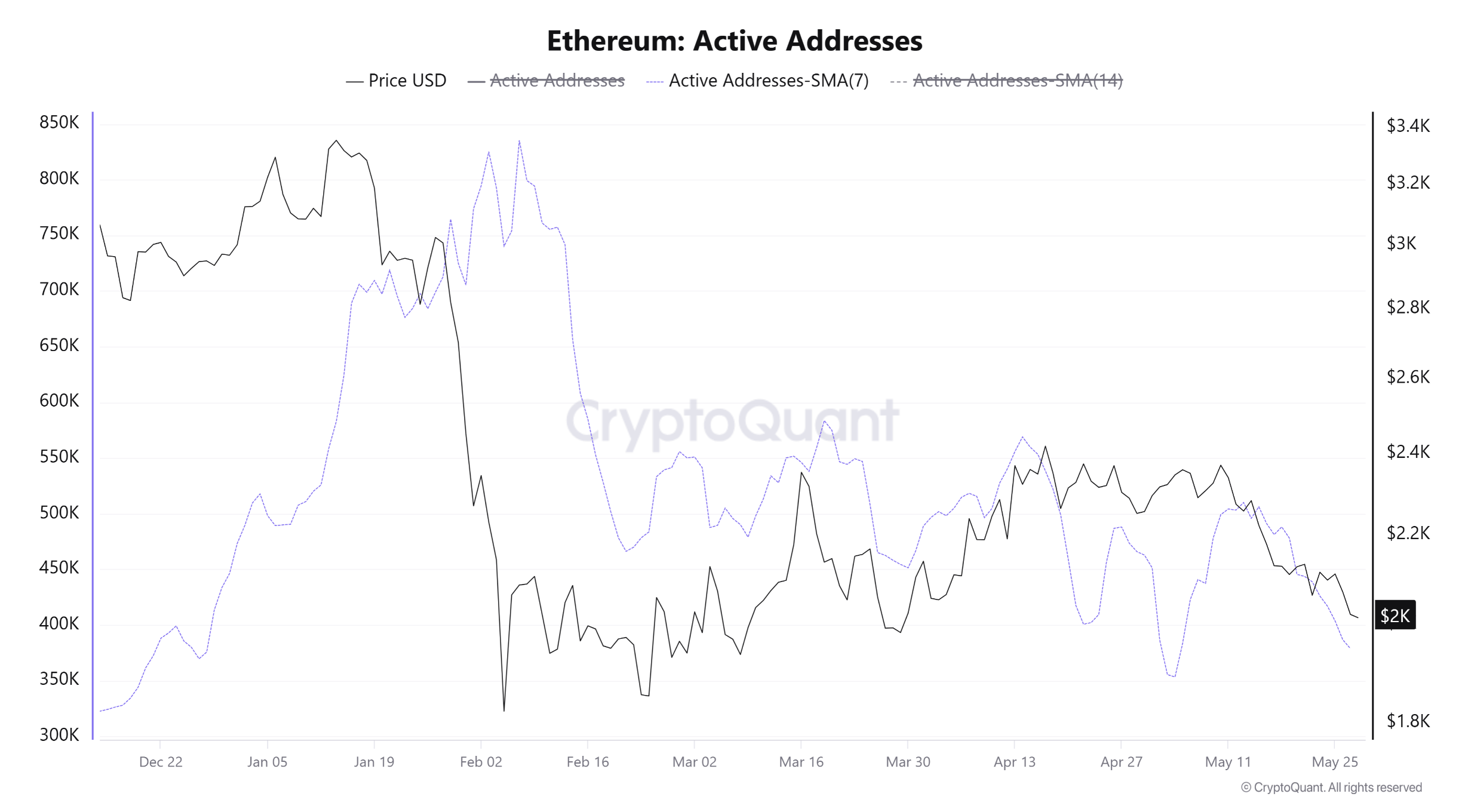
The core takeaway here is that Ethereum adoption is strong and growing.
More people are creating wallets, moving assets, and interacting with smart contracts than during the peak of the 2021 bull run.
 Source: Mitrade
This is the trade-off of recent upgrades.
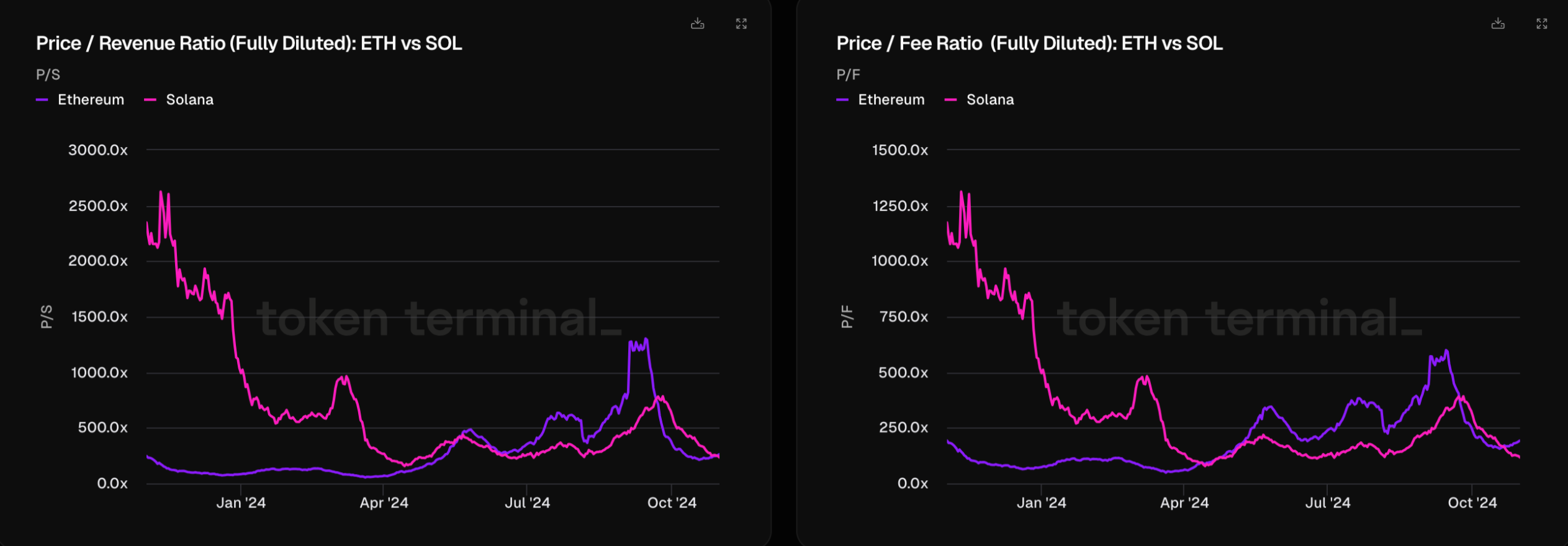
While the Fusaka upgrade successfully dropped gas fees to fractions of a dollar (a huge win for everyday users), it drastically reduced the network's overall revenue.
Ethereum is now losing the fee-generation race to competitors.
 Source: Bitget
To put it simply, Bitget is saying that Ethereum has essentially gone "on sale" relative to how much money the network is making.
This connects directly to the drop in fee revenue.
Ethereum's "burn" mechanism relies on high transaction fees to destroy ETH.
Because fees are so low right now, the network is creating more ETH to pay stakers than it is burning, causing the total circulating supply to expand.
There’s a word for this and you know it - inflation.
Market just went through a major reality check.
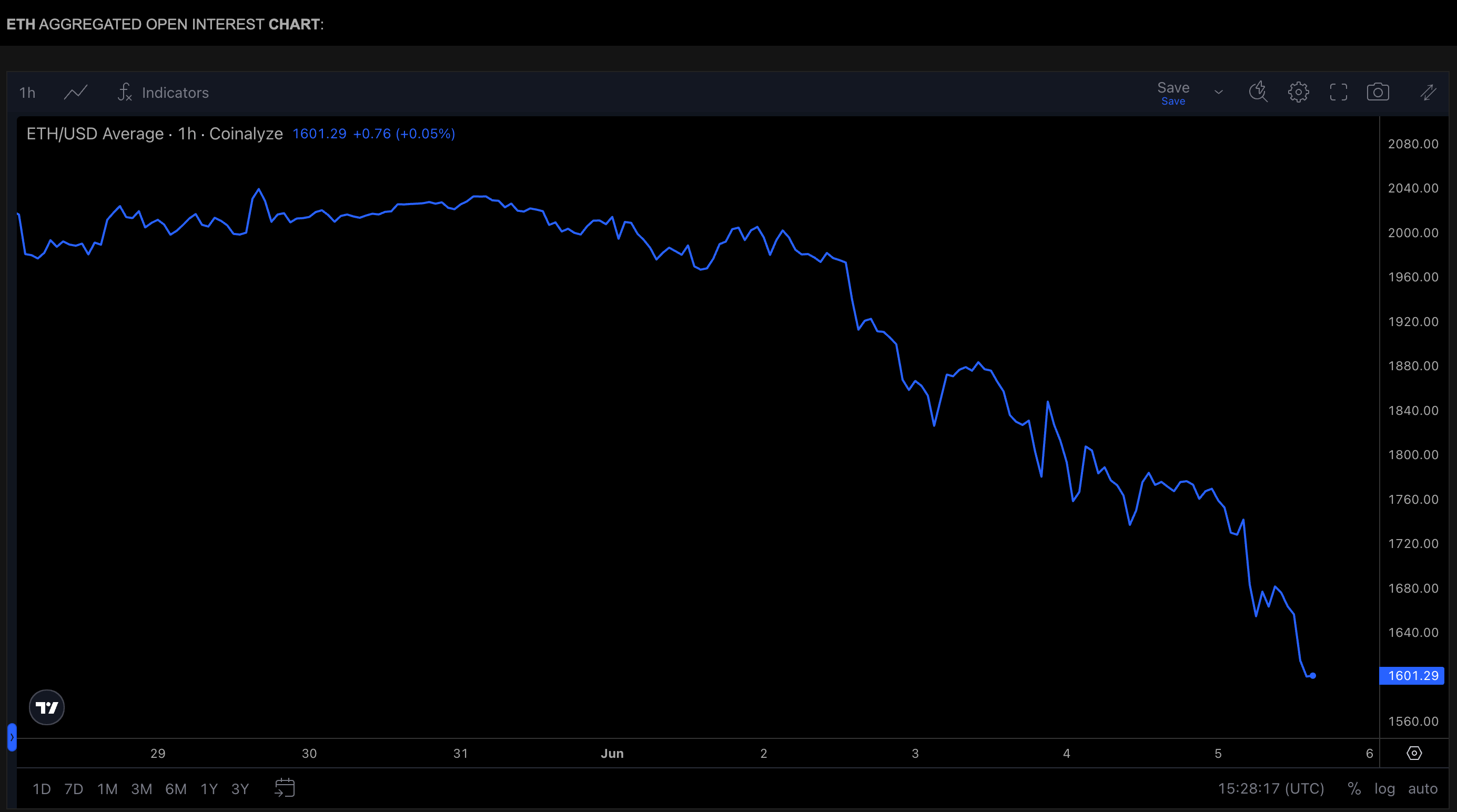
Basically, Open Interest is the amount of borrowed money leverage traders are using to bet on Ethereum's price.
When OI spikes too high, the market becomes like a house of cards where one small price drop can trigger a chain reaction of forced liquidations.
The recent sharp drop in the chart shows a massive leverage wipeout. All the risky, speculative bets were suddenly forced out of the market.
 Source: Coinalyze
TL;DR: More people are using Ethereum than ever, but super-cheap transaction fees mean the network is making less money and printing more coins. Fortunately, a recent market drop wiped out the risky gamblers, resetting the network for a much healthier, safer run.
2026 ETH forecasts show a major structural disagreement among analysts.
Pessimists point out regulatory delays and stiff competition.
Optimists assume smooth network upgrades, steady ETF inflows, and a broader market recovery.
Institutional forecasts for year-end 2026 are spread across a remarkably wide range.
| Forecast Source | 2026 Target Range / Price | Market Sentiment |
|---|---|---|
| CoinCodex | $1,965 – $2,361 | Neutral / Sideways |
| Citi | $3,175 | Cautious (Stalled laws & lower fees) |
| Fundstrat | $4,500 | Bullish (Broader market recovery) |
| Standard Chartered | $7,500 | Highly Optimistic (ETF inflows) |
Market reality check: Prediction markets share the current "wait-and-see" mood - Polymarket assigned a 34.5% probability that ETH clears the $3,500 mark by the end of the year.
Mid-term forecasts depend entirely on whether Ethereum can win back its fee dominance and if big institutions actually start interacting on-chain rather than just holding ETFs.
| Era | Algorithmic Model (CoinCodex) | Institutional / Consensus Target |
|---|---|---|
| 2027 Outlook | $2,520 – $4,325 | $7,000 – $8,000 |
| 2028–2029 Peak | Capped low due to L1 competition | $7,500 – $12,000 ($10k bull case) |
The bulls expect Ethereum to benefit heavily from a post-halving cycle recovery similar to what happened in 2021.
On the flip side, algorithmic models treat growing competition from faster blockchains (like Solana, for example) as a permanent lid on ETH's growth.
At a four-year horizon, the gap between the most cautious and most optimistic calls become the abyss of a massive $35,000. This spread proves that long-term modeling is anything, but a certainty.
But if we’re playing this a guessing game, here’s what experts say:
What’s interesting here is that even the absolute worst-case scenario has ETH nearly doubling from today's price of around $1,978.
The general sentiment is that even if the network loses its competitive edge, the long-term floor remains surprisingly high.
To help you make sense of the wildly different forecasts, here is a brief outline of what actually need to happen for the market to hit those highs or lows.
For Ethereum to reach five figures, a few major pieces need to fall into place:
For the pessimistic targets to play out, Ethereum needs to face a combination of the following roadblocks:
Disclaimer: This article is for informational purposes only and does not constitute investment advice or a recommendation to buy or sell crypto assets. Any views, opinions, or forward-looking statements reflect current market sentiment and publicly available information and should not be relied upon as a basis for investment decisions.
Ethereum the network is in better technical shape than it's ever been. Ethereum the token is having one of its worst stretches in years.
The honest answer to "where is ETH going in 2026" is: nobody knows, and anyone who tells you otherwise is working from a single scenario dressed up as a forecast.
What we do know is that the fee revenue problem is real, the ETF outflow streak is a genuine headwind, and the Glamsterdam upgrade is the nearest catalyst that could shift the narrative.
The bull case isn't dead. It just needs a few things to go right at the same time.
Next read: Solana Price Prediction 2026–2035
You can buy ETH on ChangeNOW. Tap the button below and follow the instructions.
Smart contracts, decentralized applications, DeFi protocols, NFTs, stablecoins, and increasingly, tokenized real-world assets. Ethereum is the primary settlement layer for most of the on-chain financial system built over the past five years.
Around 120 million ETH in circulating supply as of 2026. Unlike Bitcoin, there's no hard cap, but the post-Merge issuance rate is low, and ETH can become deflationary during periods of high network activity when burn rates exceed issuance.
No. ETH is a volatile asset. Stablecoins like USDC and USDT run on the Ethereum network, but ETH itself is not pegged to anything.

TON vs GRAM vs Toncoin: Same, But Different, But Same?
Toncoin is becoming GRAM. And no, you don't need to do anything. Here's what's actually changing, what isn't, and how ChangeNOW is handling the transition.

NEAR Protocol Overview in 2026
Most crypto projects added an AI narrative after the market decided AI was the next big thing. NEAR Protocol had founders with machine learning backgrounds years before that trend existed.

Cardano Price Prediction 2026–2030: Bull & Bear Scenarios
An objective, data-driven Cardano price prediction for 2026–2030. We analyze ADA's developer activity, DeFi metrics, and upcoming network upgrades to map out realistic market scenarios.


