International wire transfers are slow, expensive, and trigger headaches.
Blockchain cross-border payments, on the other hand, let you send the money in minutes: from your wallet to theirs directly with no extra fees or middlemen.
And you don’t have to be a crypto expert to do that. Let us bring you more details.
Before diving into how blockchain transforms cross-border payments, let’s first establish what cross-border payments are in the traditional sense.
We’ll cover the basics of sending money across borders in the general first and then explore how blockchain technology changes the game.
Cross-border payments are transactions: you send money to an individual or a business in another country. These payments are essential for global trade, paying suppliers, or transferring money to family and friends abroad.
Traditionally, this process involves banks or payment providers as intermediaries. This can cause delays, high fees, and often, currency conversion. So, how does blockchain fit into all this?
When you send a payment via blockchain, the transaction is verified by a network of nodes. This ensures the transaction is legitimate without relying on centrally controlled banking networks or other middlemen.
Once verified, the transaction is recorded and added to the blockchain. The decentralized nature of blockchain means everyone can see the transaction, making it secure and tamper-proof.
But how is it any different from your regular crypto transfer? Read on, we’ll explain everything.
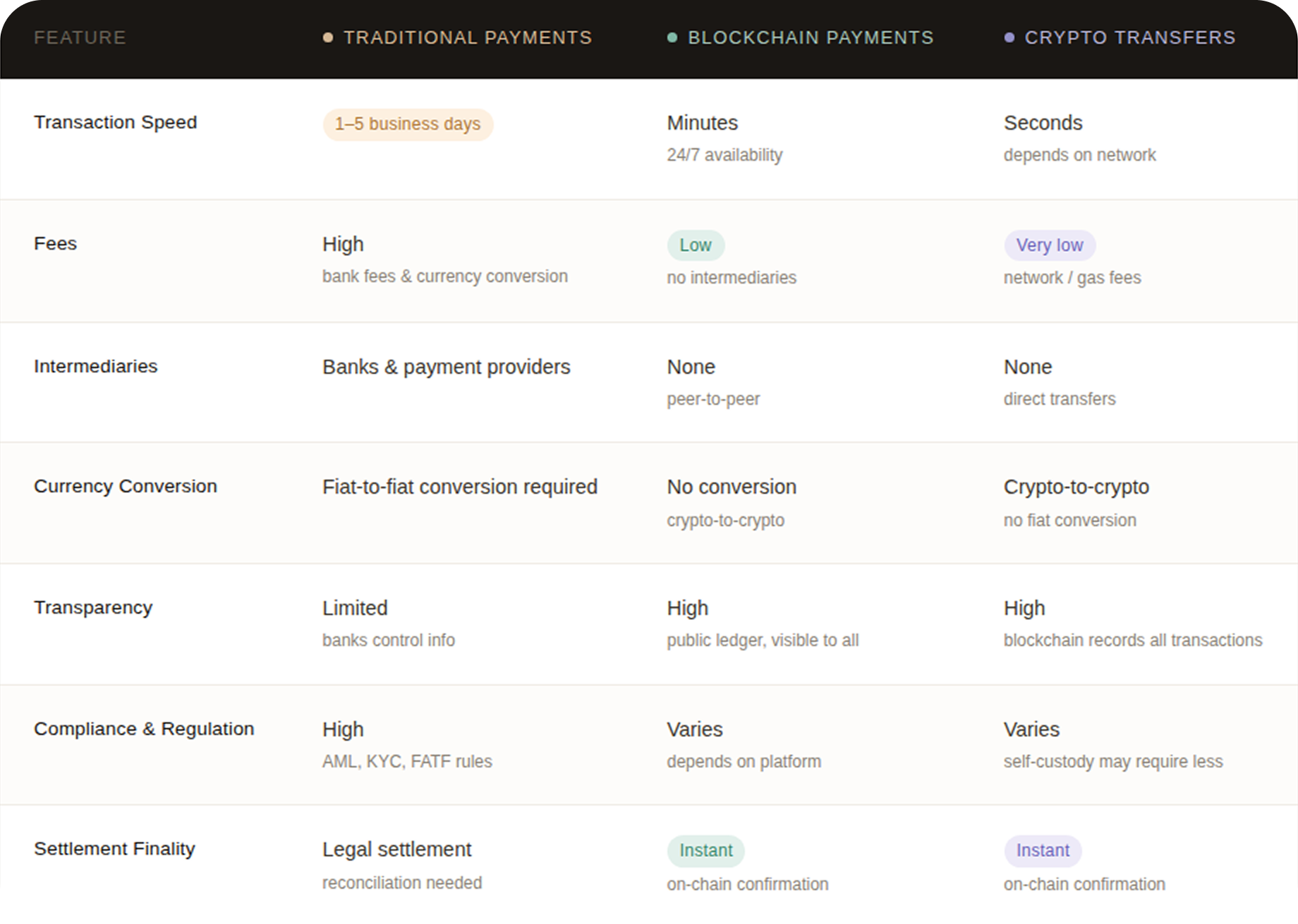
In traditional cross-border payments, the process usually involves banks or payment providers like Western Union. When you send money internationally, the payment goes through several intermediaries. First, your bank sends the funds to a correspondent bank, which forwards them to the recipient's bank in the destination country.
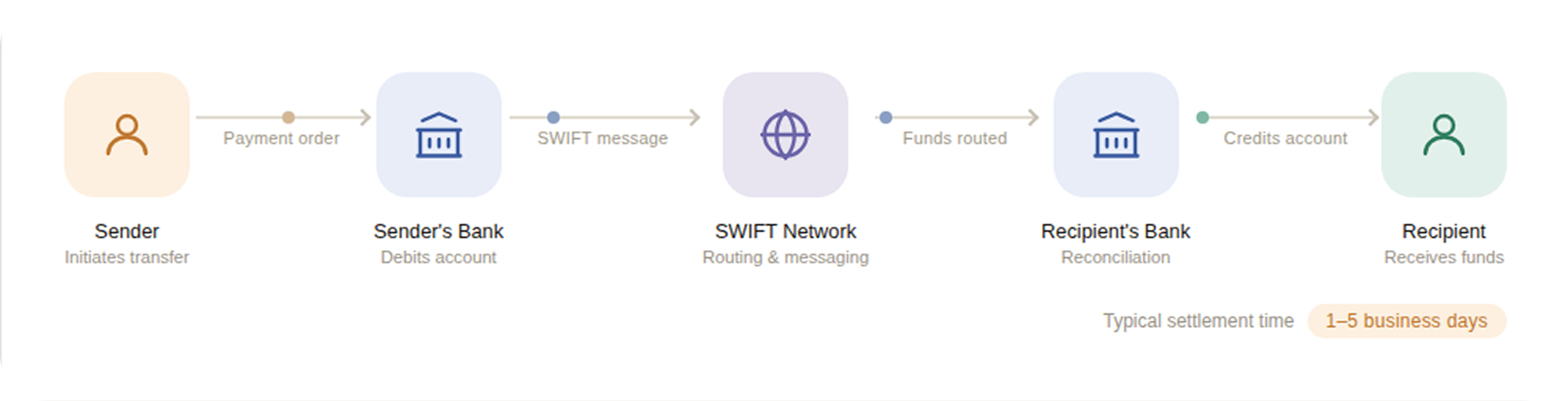
This system can take several days to complete. Banks are open only during business hours, and payments may be delayed due to time zone differences or weekends.
Additionally, there are often high fees for currency conversion and service charges from each intermediary involved.
In short, the traditional method is slow, expensive, and reliant on middlemen, which means more opportunities for mistakes or delays.
Learn more about traditional banking vs blockchain dynamic from our latest blog post.
Blockchain cross-border payments cut out the roadblocks, bypassing a process that can be both costly and time-consuming.
Simply put, it works like this: you send money via blockchain, the person you send it to receives it. End of story.
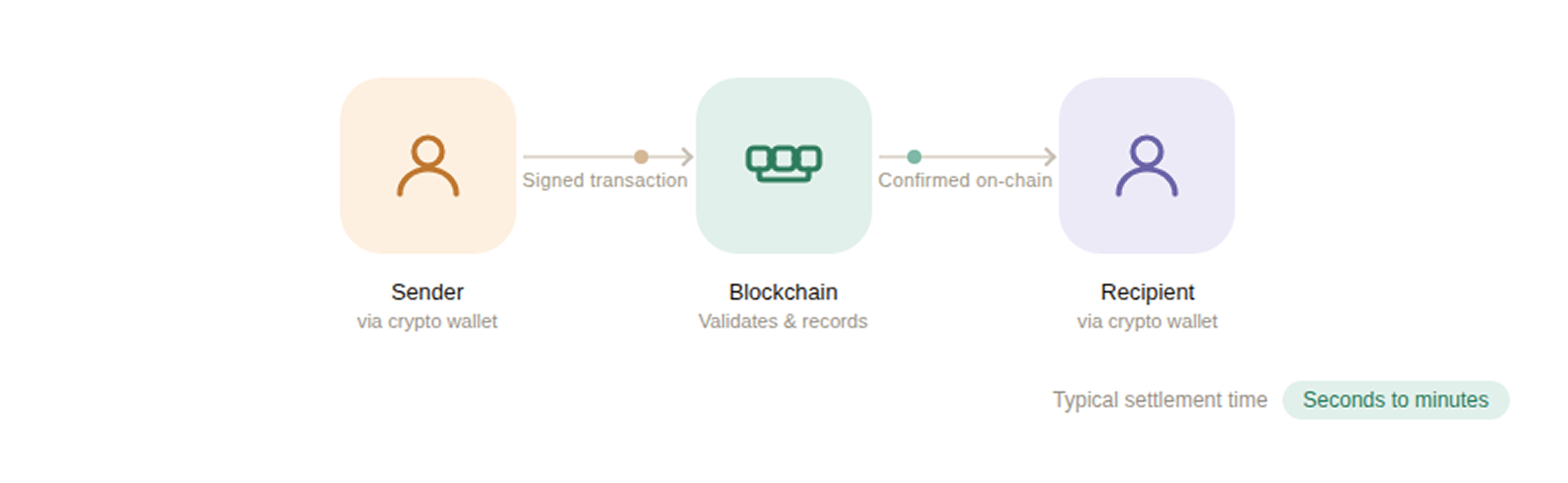
This is made possible by using a decentralized ledger, which eliminates the need for banks or payment providers.
The transaction is verified by the network and added to the blockchain, where it’s visible to all participants. This process is quick: payments typically settle in minutes, 24/7, without waiting for business hours.
Regular crypto transfers are simple peer-to-peer transactions between two parties. The process bypasses traditional banking systems too, but it’s simpler than that of cross-border payments.
Here’s why:
Purpose & Context
Regular crypto transfers are simply moving assets between wallets, with no implied commercial or remittance purpose.
Meanwhile blockchain cross-border payments are specifically designed to replace or replicate traditional international wire transfers (like paying a supplier in another country).
Compliance & Regulation
Cross-border payments must often comply with AML (Anti-Money Laundering), KYC (Know-Your-Customer), and FATF Travel Rule requirements meaning sender/receiver identity data must travel with the transaction.
Regular transfers between personal wallets usually requires little to no compliance, especially self-custodied transfers.
Settlement Finality
Cross-border payments on blockchain need to be officially settled and reconciled for accounting purposes, often involving things like invoices. It’s all about making sure everything matches up with the books and follows the legal rules.
With regular crypto transfers, you just need on-chain confirmation.
Use Cases
Regular transfers: portfolio rebalancing, DeFi interactions, personal wallet management.
Cross-border: remittances, B2B trade payments, payroll for international contractors.
One of the biggest advantages of blockchain is the speed. No more waiting 1-5 business days like with traditional wire transfers or relying on the operating hours of banks.
Blockchain transactions happen 24/7, and the funds can settle in minutes, sometimes even seconds. It allows direct peer-to-peer payments, eliminating unnecessary delays.
Imagine receiving a payment from overseas with a single payment link and no need for complex banking processes. Like in the case of this Reddit user.
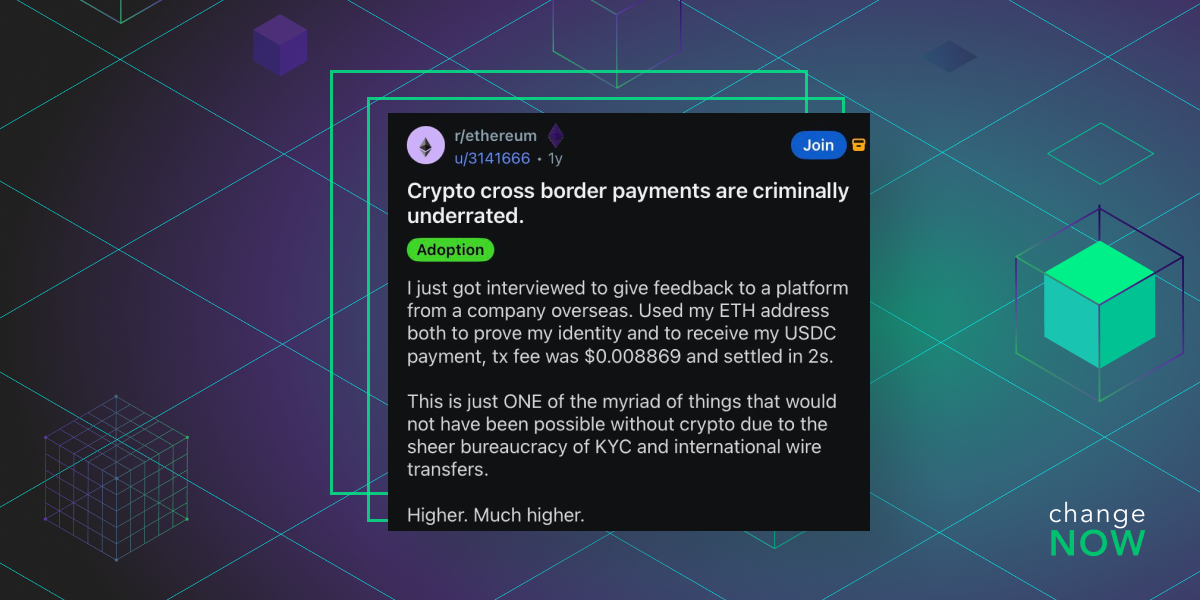
Source: Reddit
That’s the speed and efficiency we’re talking about.
Traditional cross-border payments often come with high transaction costs, currency conversion fees, and extra charges from banks and intermediaries.
Blockchain eliminates middlemen, reducing the cost of transferring money across borders SIGNIFICANTLY.
For example, instead of paying $20 to transfer $1,000, you might pay less than a dollar in transaction fees with crypto.
A much cheaper option, especially for businesses sending multiple payments.
Blockchain offers a level of security that traditional payment methods can’t match.
Since each transaction is recorded on a decentralized, immutable ledger, it’s nearly impossible to tamper with the payment data.
Plus, all participants in the network have access to transaction records, creating full transparency.
When using blockchain cross border payments, you’re not restricted by the limitations of traditional financial systems.
Blockchain allows for a seamless, borderless experience and gives you the ability to send/receive payments not relying on local financial infrastructure.
While blockchain makes cross-border crypto payments fast, secure, and transparent, businesses still need a way to automate the invoicing process.
Blockchain-based invoicing feature allows you to automatically generate and send invoices directly tied to the payment on the blockchain.
You can also use crypto payment links to simplify the process even further. Just share a link, and the customer can complete the payment right there.
You don’t even need to track it manually. Once a payment is made, the invoice is generated and recorded in the system, making everything much more efficient.
Automation also ensures that payments and invoices are synced in real-time, reducing human error and improving cash flow management.
And if you're dealing with microtransactions, Lightning invoices offer a faster alternative to traditional crypto invoices with even lower fees and near-instant settlement. Unlike regular crypto invoices, Lightning invoices settle off-chain and provide instant finality.
Blockchain is revolutionizing cross-border payments by offering faster, cheaper, and more secure transactions.
It cuts out intermediaries, so that businesses and individuals can send money across borders in minutes, without the high fees and delays of traditional methods.
With automated invoicing and features like Lightning invoices, blockchain makes global payments cheaper, simpler and more efficient.
Zcash News: ZEC Rebounds After Orchard Fix Puts Privacy Coins Back In Focus
ZEC bounced back after Zcash fixed the Orchard security issue with the NU6.2 update. Here’s what happened, why Monero got pulled into the discussion, and what traders checked before the panic cooled down.

Ethereum Price Prediction 2026: Market Sentiment & Insights
Ethereum’s network activity is hitting ATHs, yet its token price recently collapsed to a multi-year low. Is this a temporary market shakeout ahead of the next major upgrade, or is ETH's economic model fundamentally broken?

Bear Flag Pattern in Crypto: Technical Analysis, Real Charts & Market Context for 2026
Secure non-custodial crypto custody on the ChangeNOW platform, highlighting how users can manage assets safely during bearish market conditions and bear flag breakdowns