People usually compare Cardano and Ethereum for one practical reason: they want to know which network makes more sense right now.
Ethereum already sits at the center of crypto activity. Most DeFi liquidity, stablecoins, major apps, and developer tooling are concentrated there. Cardano moved in a different direction. It developed more slowly, leaned harder on research, and built a reputation around simpler staking and lower transaction costs.
That is why this comparison is no longer just about technology. In 2026, it is mostly about scale: where builders launch, where capital stays, and where users actually do things on-chain.
The Short Answer
Ethereum still sits at the center of most on-chain finance. If someone wants to trade on a DEX, borrow stablecoins, or move liquidity between protocols, there is a good chance the activity touches Ethereum or one of its rollups.
Cardano works differently. Transactions are cheaper and staking ADA is easy for regular holders. But the scale of the ecosystem is still smaller. Fewer applications, less liquidity, and far fewer users interacting with it every day.
Key Takeaways
Most serious DeFi activity still happens somewhere around Ethereum.
Numbers from DeFiLlama show how large that environment is. Billions of dollars move through Ethereum lending markets, liquidity pools, and trading protocols.
Cardano follows a slower development path. The project focuses more on research and predictable fees than on rapid experimentation.
In practical terms the difference between the networks comes down to adoption. Ethereum simply hosts more developers, more applications, and more capital than Cardano.
If you already hold ADA and want to try what exists on Ethereum, moving between the two assets usually takes only a few minutes.
Before getting into technical details, it helps to step back and look at how these two ecosystems behave in practice.
Cardano vs Ethereum Quick Comparison
Stepping back, the difference between these ecosystems becomes easier to visualize.
Metric
Ethereum
Cardano
Launch year
2015
FAQ
Ethereum hosts the largest crypto economy today. Most DeFi protocols, stablecoins like USDT and USDC, NFT platforms and developer tools operate across its ecosystem and Layer-2 networks. Cardano follows a different path, focusing on research-driven architecture and slower development. Both support smart contracts, but the scale of real economic activity on Ethereum is much larger.
It depends on what kind of exposure you want. Ethereum represents the infrastructure of today’s Web3 economy, where most applications and liquidity already exist. Cardano attracts investors who believe a smaller ecosystem could grow if adoption accelerates. Some people choose one asset, while others hold both to balance stability and potential upside.
Possible, but unlikely in the short term. Ethereum has thousands of applications, deep liquidity and one of the largest developer communities in crypto. Those network effects reinforce each other. For Cardano to flip Ethereum, it would need a large wave of developers, projects and capital entering its ecosystem.
On its base layer, Cardano transactions are usually cheaper and more predictable than Ethereum mainnet. However, most everyday Ethereum activity now happens on Layer-2 networks such as Arbitrum, Optimism and Base, where transactions are fast and fees are much lower.
Developers usually build where users and liquidity already exist. Ethereum became the launchpad for DeFi and NFTs early on, which attracted developers, funding and infrastructure. Once that momentum started, the ecosystem kept expanding. Cardano supports smart contracts, but its developer community is still smaller.
Ethereum has one of the most mature developer ecosystems in crypto. Tooling is extensive, documentation is widely available, and there is a large user base ready to try new applications. That environment makes launching and scaling new projects much easier compared to smaller ecosystems.
For many users it is. Cardano allows ADA delegation directly from many wallets without locking tokens. Ethereum staking often involves running a validator or using staking services. Both systems secure the network, but Cardano’s delegation model tends to feel simpler for everyday holders.
Users often move assets between ecosystems to explore DeFi opportunities, staking strategies, or liquidity pools. For example, someone holding ADA might decide to explore lending markets or decentralized exchanges available inside the Ethereum ecosystem.
Platforms like ChangeNOW allow users to swap assets directly without creating an exchange account.
Ethereum behaves like a global financial metropolis where thousands of projects compete, collaborate, and evolve simultaneously. Cardano resembles a carefully planned research campus still expanding its infrastructure.
The gap between them is not simply technological. It is economic scale.
Ethereum Is Now an Ecosystem, Not Just a Chain
Many comparisons between Cardano and Ethereum still assume a simple Layer-1 vs Layer-1 competition.
That assumption no longer reflects reality.
By 2026 Ethereum functions as a settlement layer for a large network of rollups.
Layer-2 networks such as Arbitrum, Optimism, Base, zkSync and Scroll process large volumes of transactions while settling security back to Ethereum.
Data on rollup activity and total value locked across these networks is tracked by the analytics platform L2Beat.
Together these networks process thousands of transactions per second, often with fees measured in cents. This rollup-centric architecture allows Ethereum to scale without sacrificing the security of its base layer.
Cardano has explored scaling solutions such as Hydra, but the ecosystem still revolves primarily around its base layer.
Because of that, comparing Cardano and Ethereum purely as Layer-1 blockchains misses the bigger picture.
Today the comparison increasingly looks like Cardano vs the entire Ethereum rollup economy.
Verdict: Ethereum is no longer just a Layer-1 blockchain. It operates as a settlement layer for an entire ecosystem of rollups that handle most user activity and transactions.
Three Questions That Instantly Clarify the Choice
Most crypto users do not choose networks by studying whitepapers.
Instead, they ask practical questions about how they plan to use their assets.
Do you want to use DeFi applications today?
If the answer is yes, Ethereum almost inevitably enters the picture.
The majority of decentralized exchanges, lending markets, derivatives platforms, and stablecoin ecosystems operate there.
Are you mainly planning to hold and stake crypto?
Cardano can feel simpler here. Staking ADA usually means direct delegation from a wallet rather than using liquid staking tokens or additional protocols
Are you choosing between ecosystem dominance and future upside?
Ethereum already possesses one of the strongest network effects in crypto.
Cardano sometimes attracts investors who believe its ecosystem could still expand significantly over time.
Once framed this way, the ADA vs ETH decision becomes much clearer.
Philosophy of the Two Networks
Ethereum evolved like a startup ecosystem.
Developers experimented quickly, new protocols launched constantly, and the DeFi boom between 2020 and 2025 cemented Ethereum as the center of decentralized finance.
Cardano took a different route from the start.
Instead of pushing features out quickly and refining them later, the project spent more time on research, formal design, and long-term planning.
Supporters argue that this gave the network a stronger foundation. Critics make the opposite point: careful design did not automatically turn into strong adoption.
That is why the debate around Cardano has changed over time. After years on the market, the main issue is no longer how the system was designed on paper. The real issue is whether enough developers, users, and capital will gather there to make the ecosystem meaningfully larger.
Fees, Speed, and Real Network Experience
For everyday users the differences become clear when interacting with the networks.
In many Cardano vs Ethereum comparisons, transaction fees are one of the first differences users notice.
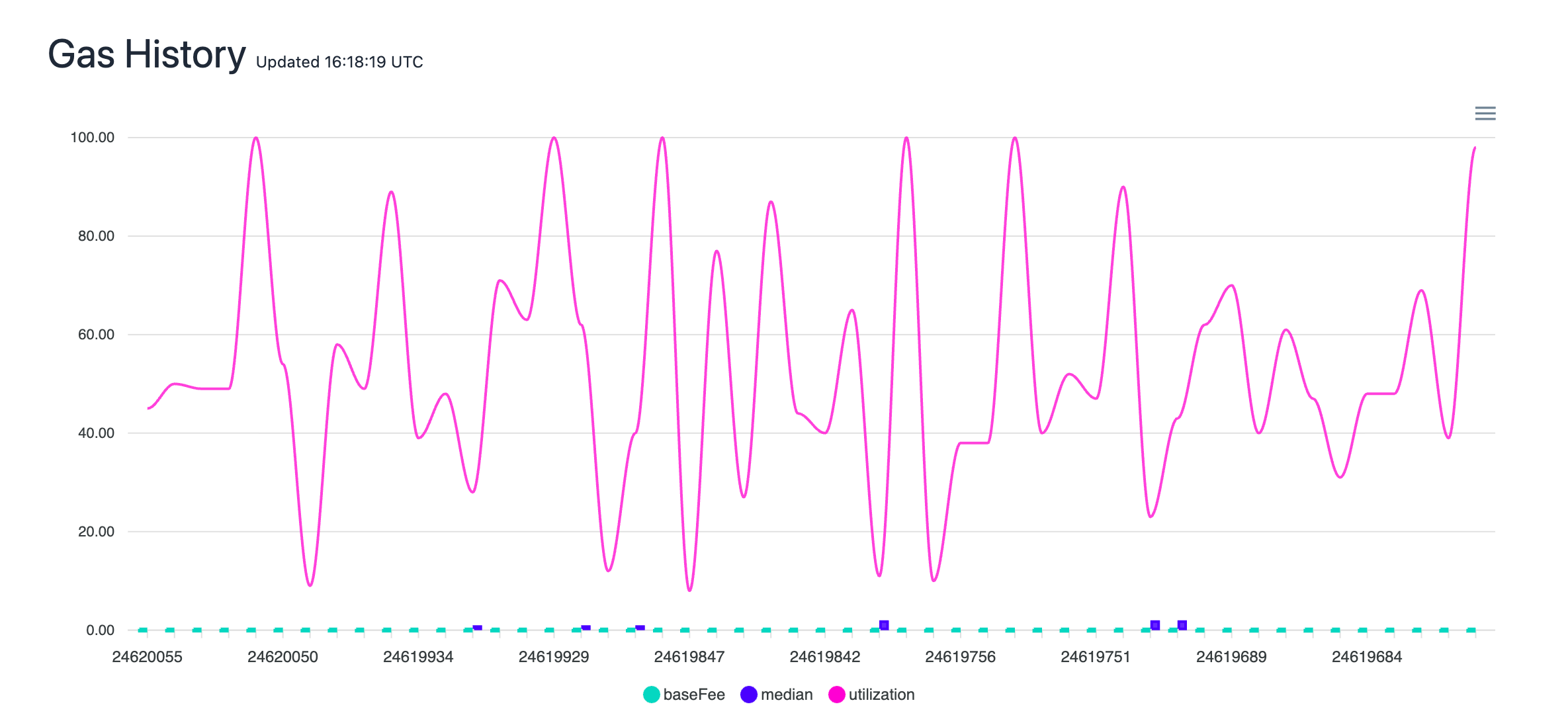
Ethereum can experience congestion, especially on Layer-1. During periods of intense activity transaction fees may increase significantly.
Source: Etherscan Gas Tracker.
Ethereum gas prices fluctuate depending on network demand. When activity rises and block space becomes scarce, transaction fees increase as users compete to include their transactions.
Layer-2 networks help solve this issue, but they introduce another complexity: liquidity and users are now spread across multiple rollups.
Source: L2Beat.
Cardano transactions usually remain inexpensive and predictable.
However, low fees often reflect lower demand, not just technical efficiency.
When a blockchain becomes the center of economic activity, demand naturally drives costs upward.
Where the Money Actually Lives
Crypto stories change fast, but on-chain capital is harder to fake.
That is why liquidity matters more than narrative.
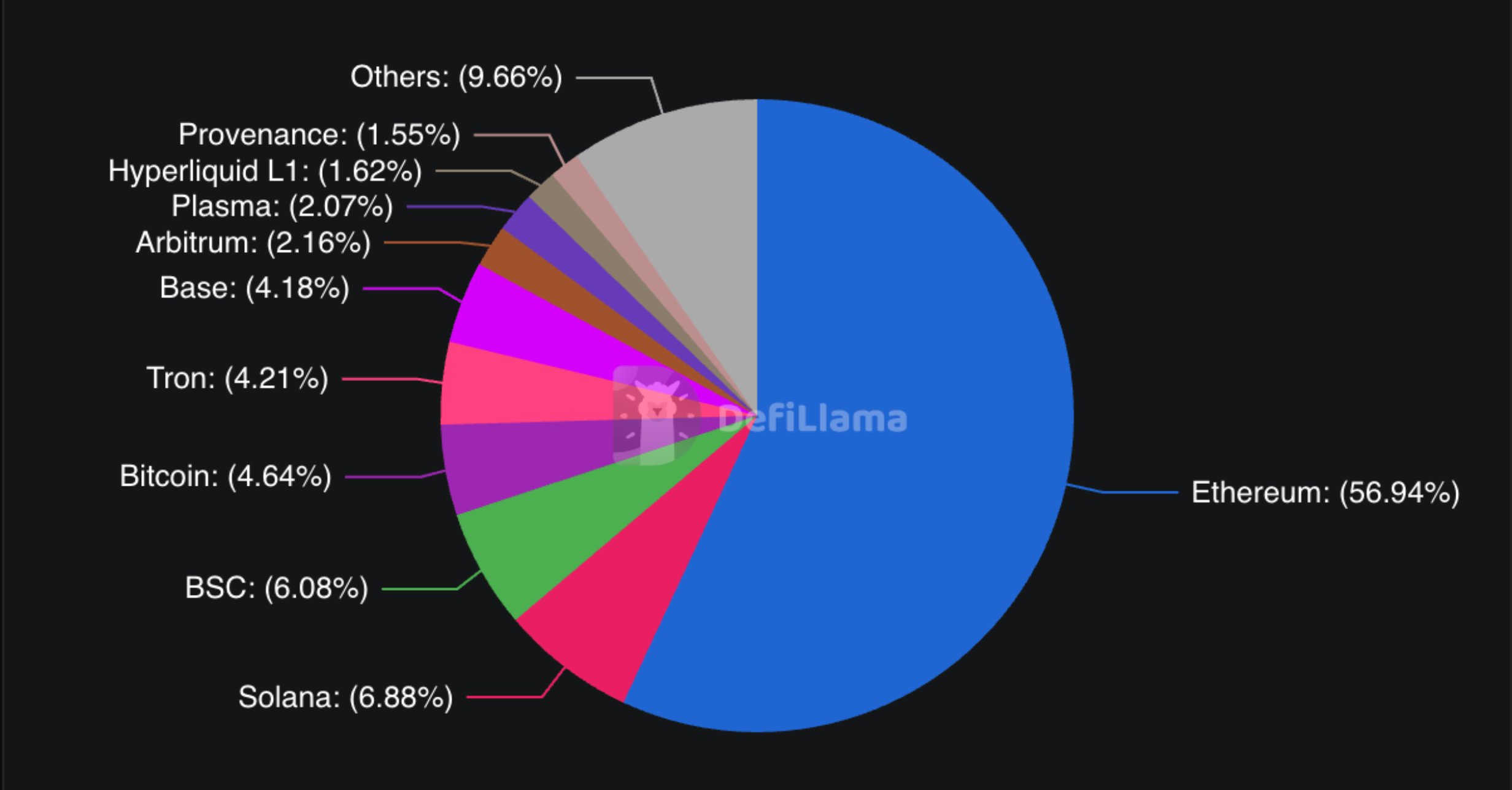
Ethereum still holds the deepest concentration of DeFi capital. On-chain data from DeFiLlama shows that tens of billions of dollars remain tied to Ethereum and its broader Layer-2 environment.
That scale affects everything around it. Trading pairs stay deeper, lending markets stay active, and new protocols have a better chance of finding users.
Source: DeFiLlama.
Stablecoins are a major part of that advantage. Large volumes of USDT and USDC circulate through Ethereum and its rollups, supporting exchanges, lending systems, and derivatives platforms.
Significant volumes of USDT and USDC circulate across Ethereum and its Layer-2 networks. These assets support trading venues, lending systems, and derivatives markets built around the ecosystem.
Source: DeFiLlama.
Cardano is still building in that direction, but the amount of capital inside its DeFi ecosystem remains much lower for now. In practice, money usually keeps gathering where markets are already active.
In crypto markets, liquidity tends to pull in even more liquidity.
Verdict: Ethereum’s largest advantage remains liquidity concentration. Most DeFi capital, stablecoin activity, and trading infrastructure still operate within its ecosystem.
Market Reality in 2026
The size gap becomes obvious once you look at the data.
Ethereum continues to hold tens of billions of dollars across DeFi protocols and related Layer-2 activity, while Cardano remains far below that level.
DeFiLlama data shows just how wide the gap still is. Ethereum secures more than $50 billion in DeFi liquidity, while Cardano sits closer to the low hundreds of millions.
Source: DeFiLlama.
Ethereum’s scale becomes even clearer when compared with smaller ecosystems This gap shows how dramatically different the economic scale of the two ecosystems still is.
Source: DeFiLlama.
Cardano’s DeFi ecosystem is still developing. Total value locked remains significantly smaller, and the number of active applications is far lower compared to Ethereum.
In crypto markets, capital usually flows where liquidity already exists. That dynamic has historically reinforced Ethereum’s position as the financial center of the Web3 economy.
Ethereum vs Cardano Ecosystem Scale
One of the easiest ways to understand the difference between the ecosystems is to look at scale.
Metric
Ethereum Ecosystem
Cardano
DeFi TVL
$50B+ TVL
~$100M TVL
Stablecoins
Dominant share of USDT & USDC
Limited presence
Active developers
One of the largest in crypto
Growing but smaller
dApps
Thousands
Hundreds
Numbers like these explain why Ethereum continues to function as the financial center of crypto.
Cardano’s ecosystem is expanding, but it remains much smaller in terms of economic activity.
Network Effects and Developer Gravity
Ethereum benefits from the kind of momentum that is hard to break.
When developers, capital, and tooling gather in one ecosystem, new projects usually keep building there instead of starting from scratch somewhere smaller.
That pattern is visible in developer activity as well. Ethereum continues to attract one of the largest builder communities in crypto.
Source: Electric Capital Developer Report
Ethereum developer activity over time based on Electric Capital Developer Report data. The ecosystem continues to attract one of the largest builder communities in crypto.
Developers build where users already are. Users go where applications already exist. Liquidity follows both.
Cardano continues building its ecosystem, but breaking strong network effects is one of the hardest challenges in crypto.
Verdict: Network effects reinforce Ethereum’s position. Developers build where users and liquidity already exist, making it difficult for competing ecosystems to catch up.
Real Use Cases Where Each Network Wins
Crypto users rarely choose networks based on theory. They choose them based on what they actually want to do.
Someone exploring decentralized finance almost always ends up interacting with Ethereum. Major DeFi protocols such as Aave and decentralized exchanges like Uniswap operate primarily within the Ethereum ecosystem and its Layer-2 networks.
Data from DeFiLlama shows that Ethereum still holds the largest share of total value locked across decentralized finance.
Users often move assets between ecosystems when exploring different opportunities in DeFi. For example, someone holding ADA may decide to swap ETH to ADA to access Ethereum-based DeFi markets.
Source: ChangeNOW.
Cardano attracts a different type of user. Many long-term holders focus on staking and passive participation in the network. Delegating ADA to a staking pool can be done directly from wallets such as Daedalus or Yoroi without locking tokens or running validator infrastructure.
Development activity follows a similar pattern. Many new smart-contract projects still launch on Ethereum because the tooling and documentation are mature. Frameworks like Hardhat and Foundry make it easier to deploy contracts and connect to existing liquidity.
Many users now move assets between ecosystems depending on the task. A long-term holder might stake ADA while moving capital to Ethereum when interacting with DeFi protocols or liquidity pools.
Investment Perspective VC Capital vs Community Capital
Ethereum’s ecosystem grew hand in hand with venture capital.
Many early DeFi protocols launched with backing from crypto-focused funds. Projects such as Uniswap and Aave attracted investment from firms like Andreessen Horowitz and Paradigm, helping them move fast and scale quickly.
That capital accelerated development, but it also meant a larger share of early token allocations stayed in the hands of founders and investors.
Cardano took a different route.
Instead of leaning heavily on venture funding, the project built momentum around a large retail community. ADA distribution in the early years focused more on broad participation than on venture-style funding rounds.
The difference still shows today.
Ethereum’s ecosystem often behaves like a startup economy fueled by venture capital. Cardano has grown more slowly, driven largely by its community rather than large investment rounds.
The Biggest Risk Each Network Faces in 2026
Every blockchain ecosystem faces structural challenges.
Ethereum’s biggest challenge today is fragmentation across Layer-2 networks.
As rollups such as Arbitrum, Optimism, Base, and zkSync expanded, liquidity and users became distributed across multiple environments. In practice this sometimes forces users to move assets between networks depending on where applications or liquidity pools exist.
However, the ecosystem is actively working on solutions. Cross-chain messaging protocols, shared sequencer designs, and interoperability layers are gradually reducing friction between rollups.
In other words, fragmentation exists – but it is also one of the most actively solved problems in the Ethereum ecosystem today.
Cardano faces a different challenge.
The ecosystem still lacks critical developer mass.
Developers tend to build where liquidity and opportunities already exist, and that gravitational pull continues favoring Ethereum.
Three Mistakes People Make When Comparing ADA and ETH
Many comparisons between Cardano and Ethereum fall into similar traps.
First, focusing only on transaction fees. Low fees alone do not guarantee adoption.
Second, ignoring liquidity. Capital concentration often determines which ecosystems thrive.
Third, assuming that technically elegant architecture automatically wins. In reality, network effects often outweigh technical design.
If You Had $10,000 Today
This is how many investors actually think about the Cardano vs Ethereum decision.
Imagine allocating $10,000 today.
Someone focused on participating in today’s DeFi economy would likely lean toward Ethereum. Most lending markets, decentralized exchanges, and derivatives platforms operate inside its ecosystem or on its Layer-2 networks.
Someone looking for a more asymmetric bet might consider Cardano. That bet assumes the ecosystem eventually attracts more developers and capital.
Smaller ecosystems sometimes offer more room for growth if adoption accelerates.
In practice, many experienced crypto investors split exposure between both networks: Ethereum for the existing financial infrastructure, and Cardano as a potential long-term expansion of the smart-contract landscape.
When Cardano Makes More Sense
Cardano may appeal to users who prioritize low transaction costs and straightforward staking. Delegating ADA to a pool is simple, and the network’s research-driven approach attracts long-term believers in its architecture.
For long-term holders, ADA can function as a slower but potentially asymmetric bet within a diversified crypto portfolio.
One reason Cardano attracts long-term holders in the Cardano vs Ethereum comparison is its simpler staking model, allowing users to delegate ADA directly from their wallet.
When Ethereum Is the Better Choice
Ethereum tends to make more sense when access to DeFi, liquidity depth, and developer activity matter.
For many blockchain applications, Ethereum remains the default platform.
Ethereum vs Cardano discussions often focus on developer activity and DeFi adoption, where Ethereum still leads by a wide margin.
Could Cardano Catch Ethereum
For Cardano to close the gap in any serious way, it would need more than incremental progress.
More developers would have to build there. More capital would have to stay there. More users would need a reason to keep coming back.
That kind of shift is possible, but it usually takes years. Large ecosystems do not lose their position quickly once liquidity, tooling, and user activity are already concentrated in one place.
Quick Takeaway
The Cardano vs Ethereum debate will likely continue as both ecosystems evolve and compete for developers, users, and capital.
Choosing between Cardano and Ethereum usually comes down to how you plan to use crypto.
If your focus is DeFi, trading, or interacting with applications, Ethereum is where most of that activity already happens. Liquidity, tools, and protocols are concentrated there.
If you are a long-term holder who values straightforward staking and prefers Cardano’s research-driven philosophy, ADA can still fit as a slower long-term position in a diversified portfolio.
If this comparison helped you see the difference more clearly, share it with someone still arguing ADA vs ETH in crypto chats.
Technology matters in crypto. But capital usually follows liquidity – and that’s where the real gravity of the market forms.
TON vs GRAM vs Toncoin: Same, But Different, But Same?
Toncoin is becoming GRAM. And no, you don't need to do anything. Here's what's actually changing, what isn't, and how ChangeNOW is handling the transition.
Ethereum’s network activity is hitting ATHs, yet its token price recently collapsed to a multi-year low. Is this a temporary market shakeout ahead of the next major upgrade, or is ETH's economic model fundamentally broken?
Most crypto projects added an AI narrative after the market decided AI was the next big thing. NEAR Protocol had founders with machine learning backgrounds years before that trend existed.