When the market stays red for weeks, crypto stops feeling like a chart and starts feeling personal. Headlines get darker. Even opening a portfolio app becomes something people avoid.
At ChangeNOW, we see that mood every day. Some users write because a swap is delayed. Others are watching a red portfolio and need to know if their funds are safe.
Nobody on our team is trying to call the bottom. Support sees the same fears return every cycle: missing payouts, wrong networks, transactions that feel stuck. This guide comes from the team that replies to those messages 24/7.
If you're new to ChangeNOW, our How It Works guide shows how swaps move from deposit to payout and where fixed and floating rates come into play.
Crypto Winter Explained (How It Feels)
Crypto winter is a prolonged period of falling crypto prices, lower market activity and nervous sentiment after a major bull market.
Historically, Bitcoin has gone through drawdowns above 70% during previous cycles, according to CoinMarketCap Academy's review of historical bear markets. Many altcoins have fallen even harder. Some projects disappeared completely, and social feeds filled with jokes about another endless bear market.
During crypto winter, users rarely think only about selling. As frustration builds and the bull-market rush fades, the mood around crypto starts to change. Easy profits dry up, weaker teams become harder to ignore and once-loud communities lose energy. At some point, people stop checking only the price and start asking themselves why they entered the market in the first place.
Traders and services that have already lived through several cycles usually stay calmer because they have seen similar periods before. Long drawdowns put pressure on liquidity, communities and products. Weak spots that stayed hidden during the rally become easier to notice.
How Long Will Crypto Winter Last?
Nobody knows. Really.
Every cycle moves in its own weird rhythm. Some bear markets burn out in a few months. Others drag on until “temporary dip” stops sounding funny. The recovery after the 2018 downturn took much longer than many people expected.
That uncertainty is exactly why crypto winter feels so exhausting. You can read forecasts all day and still feel lost when money is already in transit.
In support, people rarely ask where Bitcoin will bottom. They want to know where their funds are, why a transaction is taking longer than usual, whether a completed swap can be reversed and what they should check before making the next exchange.
Support tickets tell us more about crypto winter than another chart ever could.
Trying to call the exact turning point rarely helps. Getting ready for it mentally and technically usually pays off more when the market starts shaking again.
Will Crypto Go Back Up? What Support Sees During The Crash
Bear markets expose who came to build and who was only riding the hype. Some projects keep shipping, liquidity stays alive and the community still has a pulse. Others are left with a ticker, thin volume and a chat where the last real message sounds like “devs?”
So “will crypto go back up?” is only half of the question. The real issue is what the user still holds: a liquid asset with active demand, or a forgotten token with thin volume, fewer routes and no clear signs of life.
Support sees this before it turns into a market thesis. Users do not come to chat asking about liquidity, routes or ecosystem activity. They come with the human version of that question: “Should I leave before it gets worse?”
One user sold after a sharp drop and wrote:
“That’s it. I’m cashing out and I’m done with crypto.”
A few months later, the same person came back with a very different mood:
“Can I reverse that exchange? Looks like the market is up again.”
No, completed swaps cannot be reversed. Panic fades. Transactions stay in wallet history.
On heavy red days, tickets get shorter and more honest. People skip the long story and bring the fear straight into chat.
“My exchange got stuck. Still waiting for my BTC, is it OK out there?”
One ticket opened with a line our support team still remembers, mostly because it said everything at once:
“Payments done - coins not come.”
Moments like these rarely need a lecture about market cycles. People want somebody to check the TXID, look at the route and tell them what is going on.
Sometimes the first reply matters more than anything else.
“No worries sir, your funds are safe.”
Crypto has always had room for hope and panic. Markets move on, headlines change, but a rushed swap can stay in your wallet history long after the fear that caused it is gone.
What Happened To The Support Inbox?
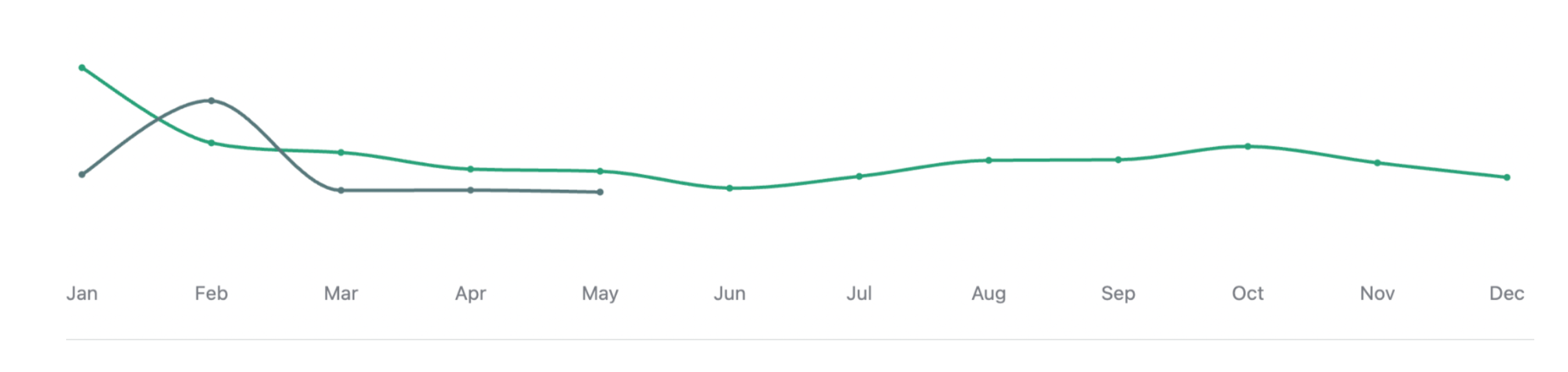
Our support data shows a February spike, then a calmer March to May period. Ticket volume stayed under control. The messages got tenser.
Monthly ChangeNOW support requests from January 2025 to May 2026.
People asked general questions:
where their funds were,
why USDT had not arrived yet,
whether the payout was delayed and what happened to their exchange.
During crypto winter, the same questions come with more stress behind them.
One message shows up again and again:
"Hi. I sent USDT, but the coins still haven't arrived. Is everything okay?"
In most cases, everything is fine. The transaction is still collecting confirmations, or the payout is waiting its turn. When the market starts swinging hard, patience disappears much faster than usual. People stop thinking about charts and start worrying about their funds.
Part of the job has nothing to do with technology. Sometimes people simply need someone to tell them that nothing is wrong and walk them through the transaction step by step.
Users who need extra help can always reach the ChangeNOW Help Center, where support articles and ticket forms are available 24/7.
Top 3 Mistakes We See Every Day (Don’t Do This)
Crypto winter makes small mistakes hurt more:
Mistake № 1
Wrong network. A user picks one network on the exchange page and sends funds through another. A simple swap turns into TXIDs, wallet checks and recovery review.
Mistake № 2
One rushed click. The market moves, the user checks the address once and confirms too fast. The chain does not care if the sender was nervous.
Mistake № 3
Full-amount transfers. Some users try to catch the bottom with the whole amount. Nobody knows where the bottom is. A small test transaction usually saves more nerves.
Support sees the same messy stories every day: wrong network, missed memo, rate panic, delayed USDT. Most cases end fine. Funds collect confirmations, payouts arrive and the user can finally breathe.
Real Support Stories From Crypto Winter
Crypto winter support rarely starts with a clean technical description. Usually, it starts with panic.
One user sent funds through the wrong chain.
For the user, it looked bad: money gone, wrong route, no obvious way back. Support checked the TXID, traced the route and moved the case into recovery. A few hours later, the user came back on Trustpilot to thank the team, including Rei and Hannah.
Here is the Trustpilot review from April 2026. A user sent funds to a different chain and thanked ChangeNOW support for helping resolve the issue.
USDT delays bring another kind of stress. The user sends funds, opens the wallet, refreshes once, refreshes again and starts spiraling.
"I think my money is gone."
Usually, the funds are still moving.
Support checks the TXID and stays in chat until the coins land. There is no magic – just a calm person on the other side while the blockchain finishes its job.
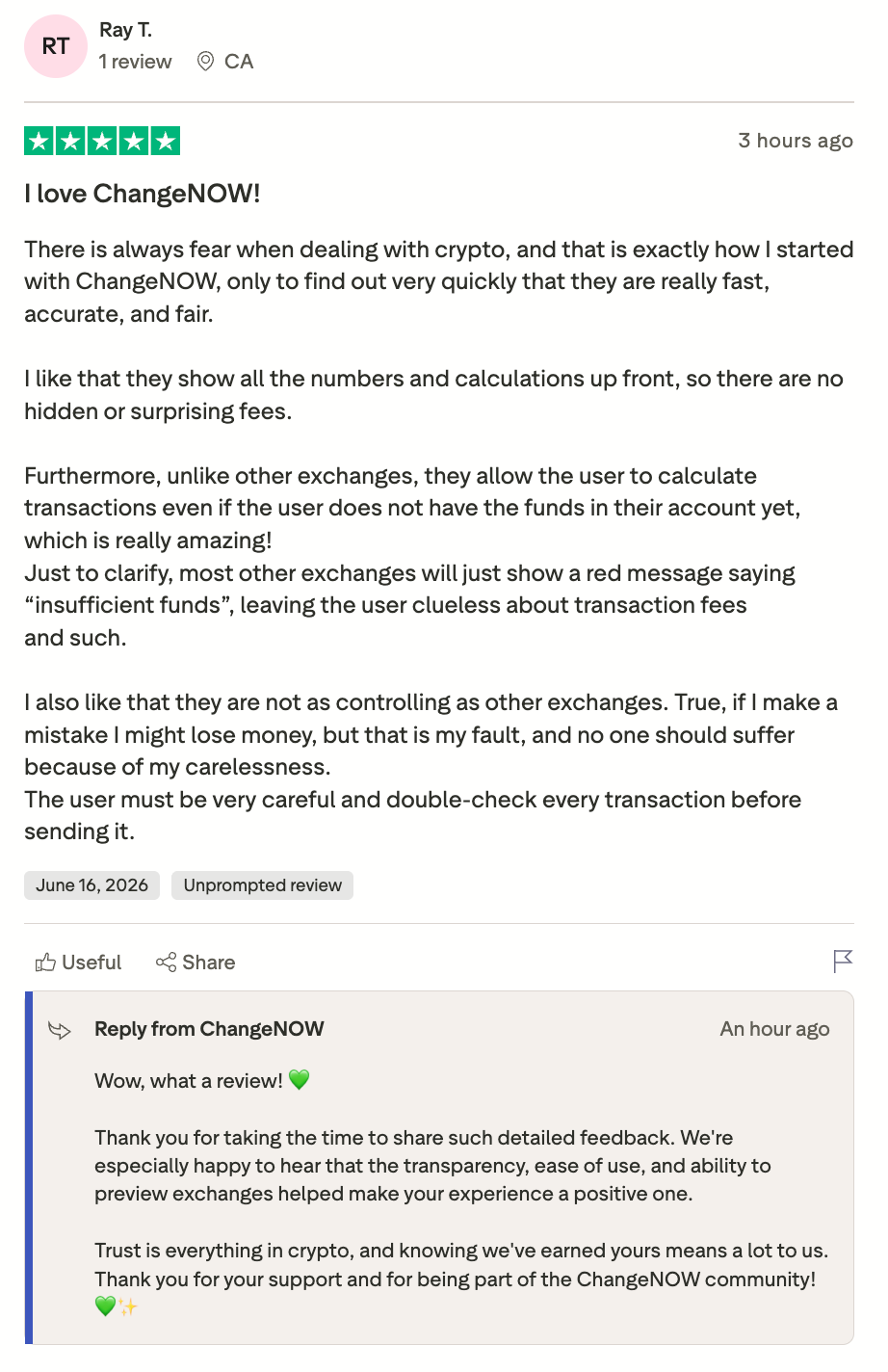
Recent Trustpilot review from June 2026.
A ChangeNOW user wrote about fear in crypto, transparent exchange details and the habit of double-checking every transaction before sending funds.
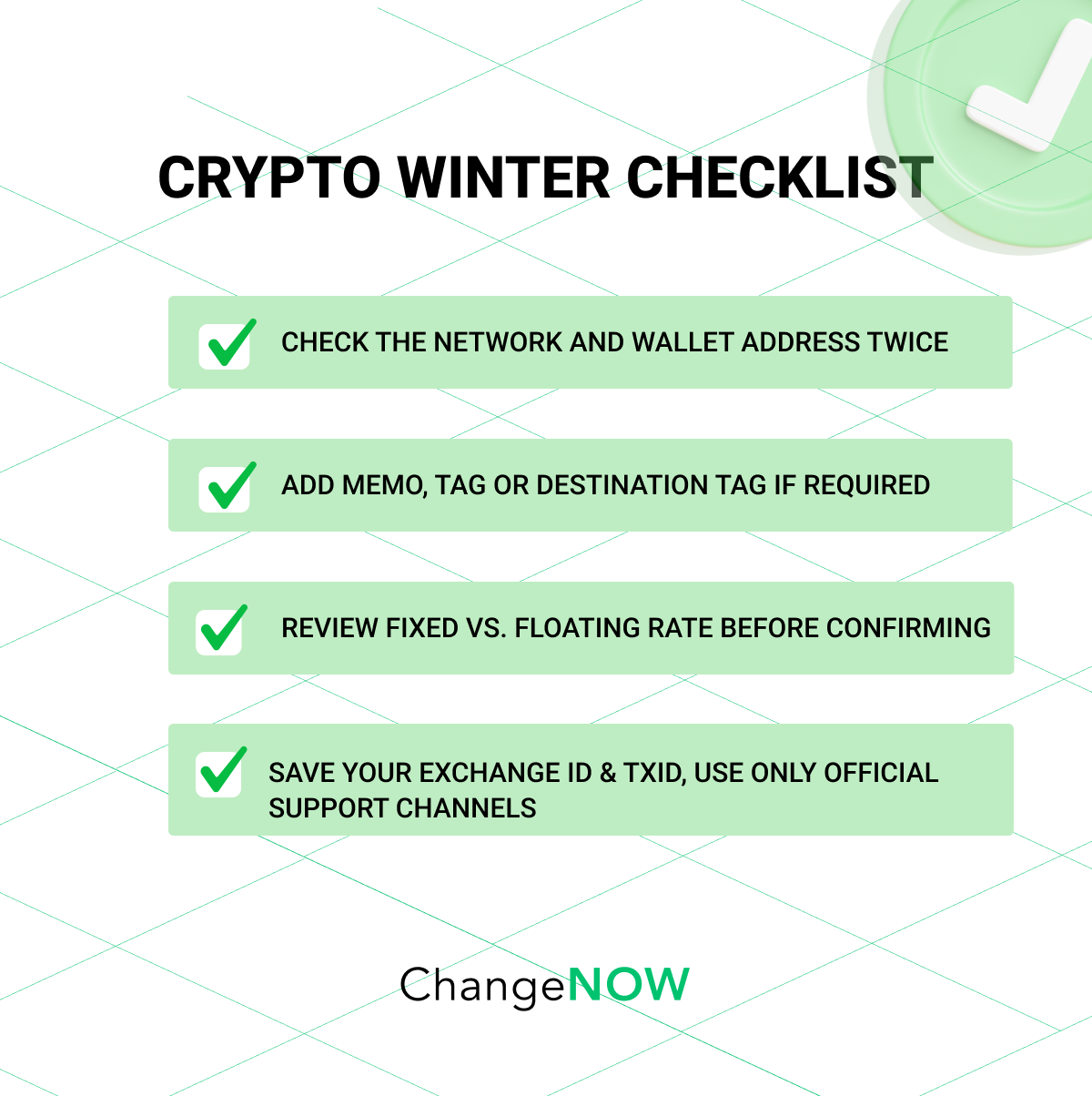
That is exactly why we created a short crypto winter checklist for users who want to slow down before sending funds.
Do We Panic Ourselves?
Honestly, not really. Everyone on the team has their own approach to the market. Some watch prices closely. Others check the news only when something big happens but in general, the mood stays calm.
Support cannot afford to panic with the market. When users come in nervous, the job is to check the transaction, explain what is happening and keep the conversation grounded.
Don’t Freeze, Just Ask
Crypto winter is unpleasant. Red charts, stuck swaps and loud headlines can make every decision feel urgent. But guessing the perfect turning point rarely helps - even while we were writing this article, Bitcoin had already dropped toward $60K, bounced back to 65k and slipped again.
Yes. Crypto winter often comes with sharper price moves and heavier nerves, so normal processing time can feel longer. The actual timing still depends on network confirmations, liquidity and payout processing.
Fixed rate fits users who want to see the expected amount before sending funds. Floating rate may change during processing, so it suits users who accept market movement while the swap runs.
Sometimes support can review a wrong network crypto transfer, but recovery depends on the route, asset and wallet details. Save the TXID, Exchange ID and screenshots before contacting support.
Market crashes make users rush. A person sees the chart move, skips one extra check and sends funds before noticing a wrong network, missing memo or incorrect address.
Save the Exchange ID, TXID, wallet address, network, asset name and screenshots. These details help the crypto support team check the route faster.
Is Crypto Halal or Haram? Bitcoin, Trading and Staking in Islam
Is crypto halal or haram depends on how it is used. Different activities such as buying Bitcoin, staking, or leverage trading are viewed separately under Islamic finance. Ownership, risk, and speculation determine why some cases are considered acceptable and others are questioned.
Discover 2026 guide to choosing the right crypto wallet | From hot vs cold storage to custodial vs non-custodial options | Keep your crypto safe with security tips



 Monthly ChangeNOW support requests from January 2025 to May 2026.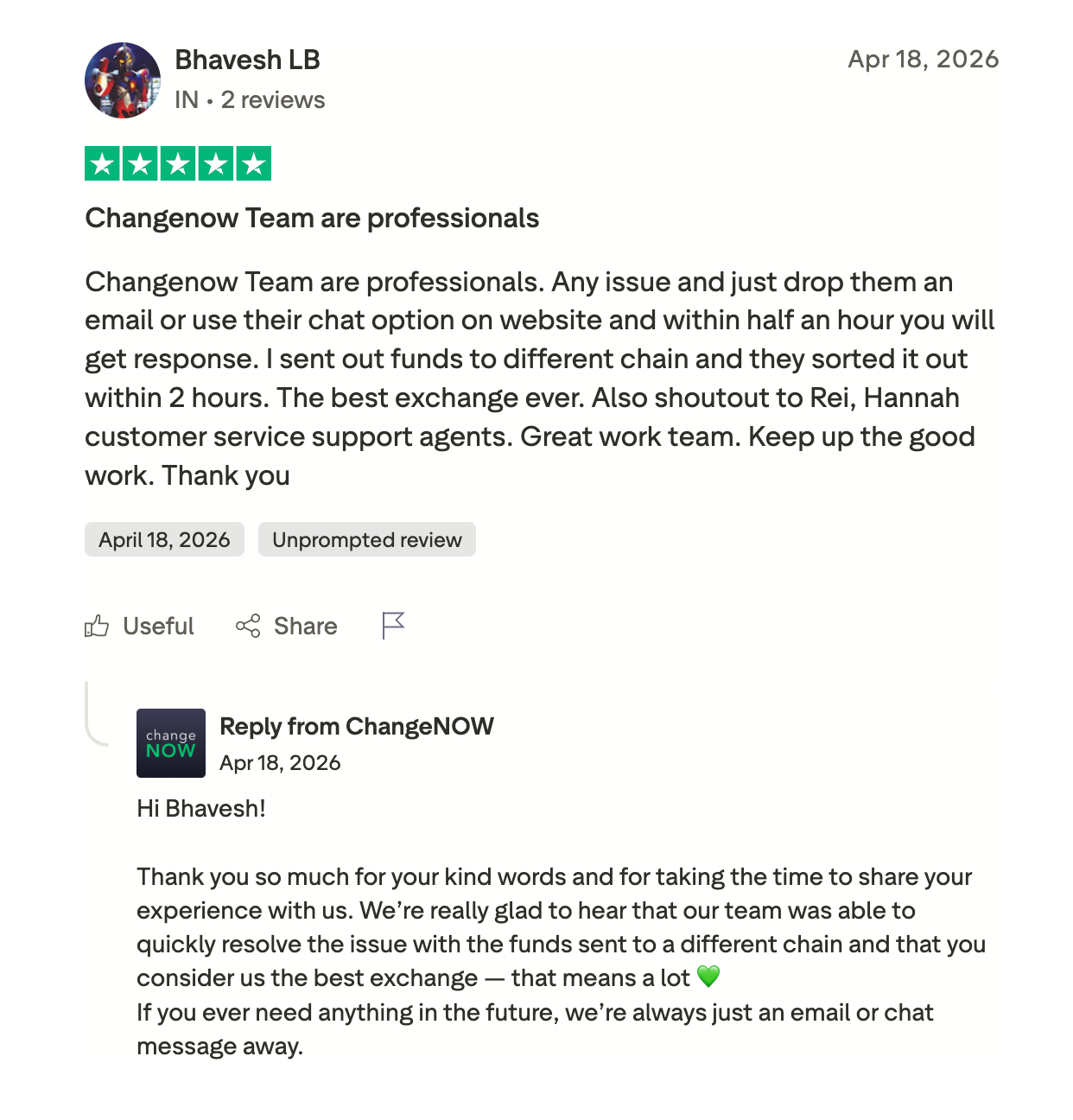
 Recent Trustpilot review from June 2026.