Most crypto exchanges now focus on user retention instead of features or fees. Learning how to attract customers who stay active is the path to lasting growth, since temporary boosts from ads or referral bonuses rarely last.
Users are loyal to platforms where onboarding is clear, execution is reliable, and everyday interactions are straightforward. This consistency builds trust and retention, which are the foundation of growth. Extra features like AI tools or new assets only matter if the core product experience is stable, predictable, and user-friendly.
This guide outlines five marketing techniques to attract customers to crypto exchanges and to grow sustainably in 2026. Apply these insights by focusing on product depth, integrated functionality, and clear structure to convert casual users into dedicated, recurring traders.
Welcome to the ChangeNOW Blog. Here we focus on research, real use cases, and practical insights — not hype. While we double-check our facts, nothing here should be taken as financial advice; crypto is a high-risk space, and your own research always matters.
1. Expand beyond trading into everyday financial use
To attract and retain users, exchanges must look past the trading screen. Growth now depends on how core actions, including portfolio tracking, payments, content, and financial operations, work together inside one product.
Growth in 2026 comes from merging core actions into a single interface as part of a marketing strategy to attract customers. Trading is more effective when combined with portfolio visibility, payments, content, and seamless action—without leaving the product. Exchanges focused only on trades compete on fees. Those supporting daily financial flows build habits.
Social and contextual interfaces
Attention is finite. Users spend more time in interfaces that feel continuous rather than transactional. Content feeds, market context, and social signals are effective ways to reach customers and help keep users oriented without forcing them to make active decisions every minute.
Social trading reduces trading’s isolation and offers users behavioral benchmarks. The goal is not to become a social network, but to ease cognitive load and provide context for engagement.
Gamified onboarding, used carefully
Game mechanics now support onboarding, learning and are useful methods to attract customers. Structured tasks, progress indicators, and limited competitions help new users learn the product without upfront expertise.
Used correctly, these mechanics lower the entry barrier without trivializing risk. Used poorly, they increase noise. The difference is intention: education and progression, not endless interaction.
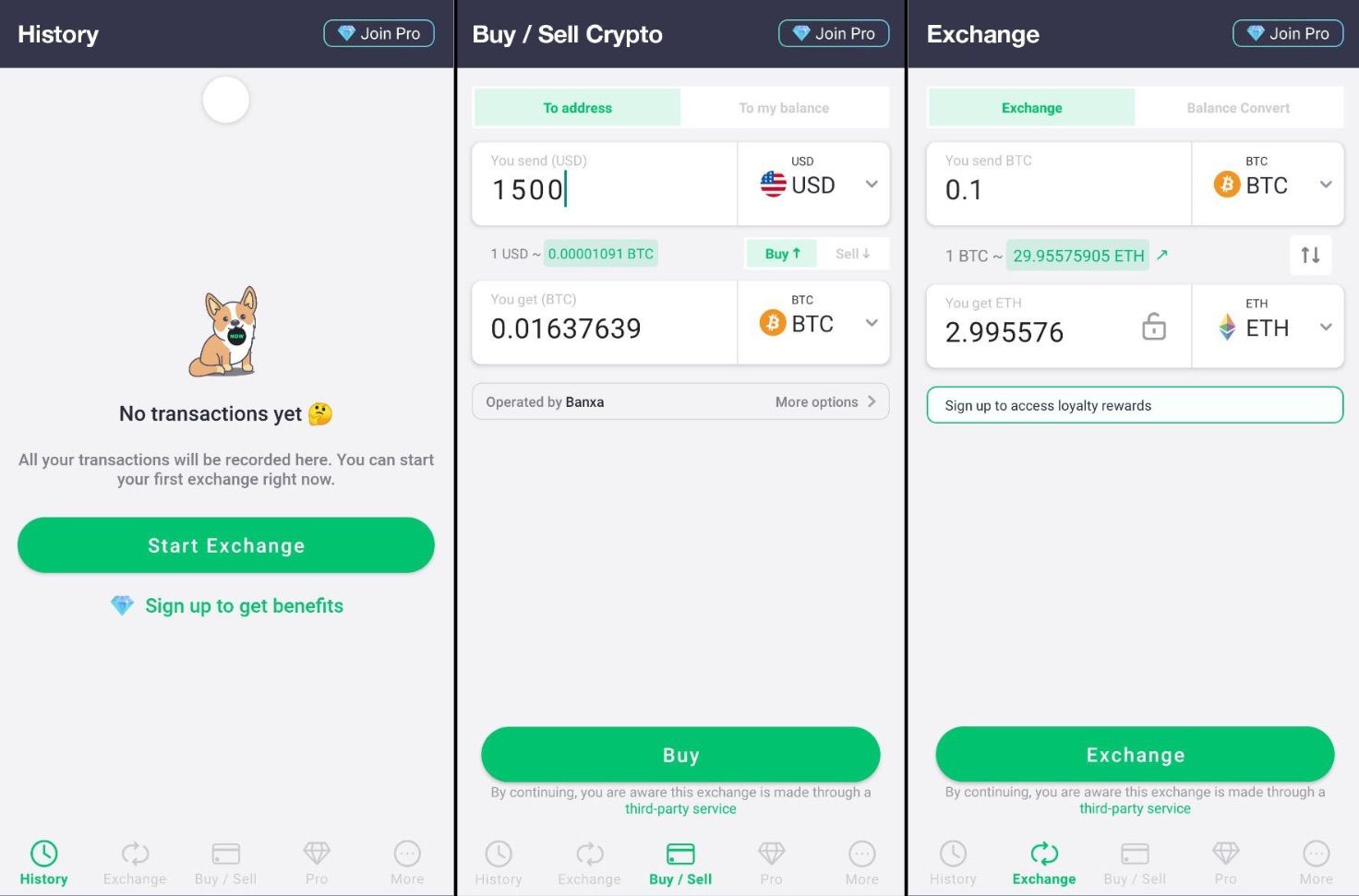
At ChangeNOW, we implement this through a radically simplified exchange interface that emphasizes immediate success. By removing mandatory registration and providing real-time transaction tracking, we reduce the cognitive load on the user from the very first second. This “one-click” journey allows new users to complete their first action without friction, building trust through transparent execution rather than complex tutorials.
The ChangeNOW Wallet mobile interface focuses on a frictionless flow, allowing users to start and track exchanges without the hurdle of traditional sign-up processes. Similar engagement patterns, including structured task-based rewards and progress indicators, are also effectively used by Binance to guide users through the initial stages of more complex platform adoption.
Payments and everyday use
For many users, holding crypto isn’t the problem—using it is. Integrating payments lets users move value into real-world spending with less friction.
Cards, instant conversion, and lifestyle integrations tie crypto activity to daily behavior, shifting exchanges from occasional use to regular reliance and help to attract users. Blockchain infrastructure becomes a standard part of financial services, fueled by sustained demand.
Office of the Comptroller of the Currency and SVB analysis
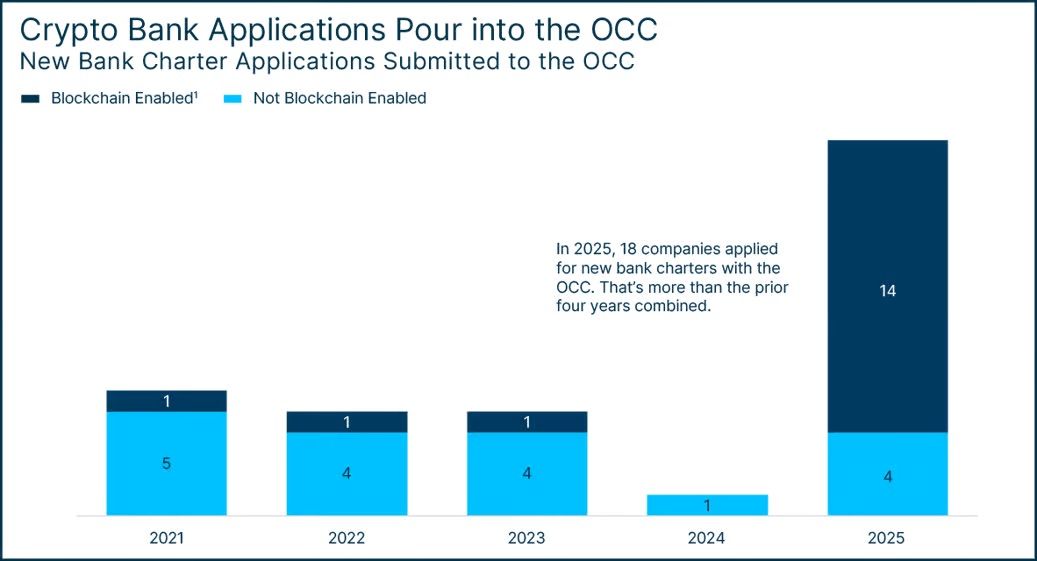
Data from the U.S. Office of the Comptroller of the Currency shows a sharp rise in applications for blockchain-enabled bank charters. In 2025, 18 companies applied for new charters — more than in the previous four years combined. Fourteen of those applications explicitly incorporated blockchain technology, compared to an average of one per year earlier.
As exchanges expand asset coverage, access to liquidity becomes an infrastructure decision. Users expect broad token and network support within a single interface, without added complexity or external handoffs.
The ChangeNOW Exchange API enables platforms to integrate cross-chain exchange functionality into existing products through a single integration, while retaining control over design and user flow. Asset coverage and trading pair availability are handled at the infrastructure level rather than through custom development.
In practice, liquidity depth and asset access are problems many exchanges choose to solve via API integration instead of maintaining their own routing and sourcing logic. We examined this approach and its trade-offs in more detail in a recent overview of exchange API models and integration strategies here
Key takeaway: Exchanges get more customers when core financial actions stay in one place, reducing handoffs and friction and turning first-time interest into repeat, everyday use.
2. Build acquisition around education and community trust
Short-term hype no longer creates durable usage. Audiences filter promotional noise, particularly messages driven by price predictions or urgency. Exchanges using this approach see sign-up spikes but a rapid drop-off.
User growth in 2026 depends on trust and clarity — that are new ways to reach customers. Platforms that prioritize education, transparency, and realistic expectations attract fewer users initially but retain more in the long term.
Expertise over promotion
Influencer-driven acquisition still works, but only when the role shifts from promotion to explanation. Content that walks users through market behavior, risk exposure, and platform mechanics produces a different kind of lead for those learning how to attract clients. These users arrive with context and are more likely to engage beyond a first trade.
What matters is credibility. When experienced practitioners explain how to use advanced features safely, the exchange benefits from informed onboarding rather than speculative traffic. This reduces support load, lowers churn, and improves long-term activity.
Community as product surface
Public community channels are no longer optional side spaces. They function as part of the product itself. Prospective users evaluate how questions are answered, how issues are communicated, and whether the discussion feels moderated and useful.
Discord and Telegram offer real-time updates, peer assistance, and early issue detection as essential ways to reach customers. Exchanges treating these as operational tools resolve issues faster.
Community feedback cycles matter. Limited co-decision tools—like voting on features—align expectations and reduce friction when updates ship.
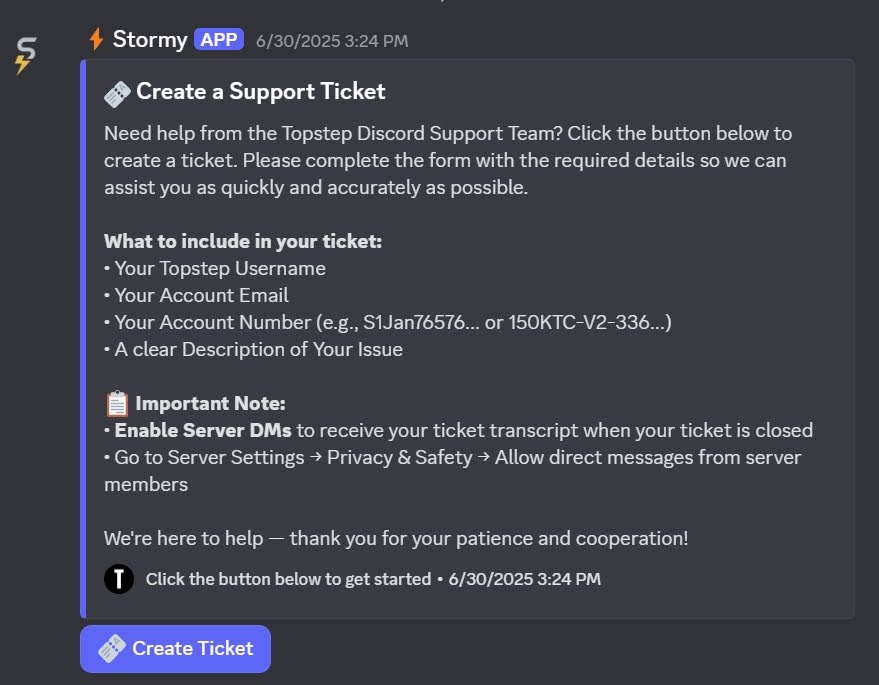
A structured Discord support flow where users submit issues via tickets, enabling faster response, clearer context, and more predictable issue resolution | topstep.com
Transparency that reduces friction
Transparency works best when it is routine, not reactive. Sharing reserve data, audit results, and security posture gives users reference points they can rely on during volatility. This lowers speculation and reduces the volume of support inquiries when markets move quickly.
Clear communication builds confidence without marketing language. Users respond better to straightforward data than reassurance framed as promotion.
What does this change over time?
User acquisition stops being transactional and becomes cumulative. Exchanges earn trust gradually by being consistent, clear, and present when users need context. This approach may grow more slowly during hype cycles, but it produces a user base that remains active across market conditions and relies less on constant incentive-driven growth.
Key takeaway: Exchanges attract clients more sustainably by replacing hype-driven acquisition with education, visible community presence, and routine transparency, bringing in users who stay active beyond their first trade.
3. Use real-world assets to lower the entry barrier
Implementing real-world assets is a key marketing strategy to attract customers — as crypto volatility continues to limit how long users keep capital on exchanges. Many are comfortable with blockchain infrastructure, but prefer not to operate in an environment tied to a single risk profile. For exchanges, this results in capital moving out during flat or declining market phases.
Real-world assets expand how users interact with the platform. Tokenized instruments allow capital to remain within the same environment while exposure adjusts to market conditions, preserving continuity in user activity.
Yield and capital management inside one interface
Reaching new customers often involves integrating low-risk, yield-bearing instruments which let users rebalance exposure without leaving the exchange. Tokenized government bonds and money market products allow direct reallocation within the trading interface.
This model maintains continuity in how users manage funds. Assets remain in a familiar environment where capital can be held, deployed, and repositioned as conditions change.
Broader asset access, applied selectively
Some platforms offer fractional access to traditionally illiquid assets, expanding diversification without requiring other platforms or high minimums.
The usefulness of these instruments depends on the quality of their execution. Clear structure, visible liquidity, and transparent risk disclosure determine whether broader asset coverage improves the product or adds unnecessary complexity.
How this affects user behavior
RWA integration leads to more stable usage patterns. Users retain funds longer, make decisions with clearer intent, and treat the exchange as part of a broader financial setup.
Familiar assets ease onboarding for users from traditional finance. On-chain activity now aligns with existing financial habits, supporting long-term engagement.
As a result, growth becomes less sensitive to market cycles. User activity stabilizes, and interaction with crypto assets remains stable across varying conditions.
ChangeNOW operates on a non-custodial model and does not hold user funds. When used as part of an exchange’s backend, it enables asset swaps without concentrating assets in centralized custody. Funds remain under user control throughout the transaction flow.
This execution model aligns with how users assess platform risk today. For exchanges, it reduces custodial exposure while supporting user expectations around self-custody and fund control. To learn how non-custodial exchange infrastructure can be integrated into your product, explore the ChangeNOW Exchange API in more detail.
Key takeaway: Exchanges attract and retain new users when they offer familiar, low-risk asset options alongside crypto, allowing capital to stay on-platform across market conditions while preserving user control and reducing perceived risk.
4. Reduce friction through UX and onboarding design
For exchanges in 2026, user patience is limited and platforms must know how to get new clients. Crypto-native interface complexity causes hesitation at first interaction. Successful platforms make actions predictable and borrow patterns trusted in fintech.
The practical goal is simple: reduce the number of decisions users must make before they can complete their first action.
Streamlined identity verification
Onboarding has long been a point of drop-off. Leading platforms now reduce repetition in identity checks by reusing verified data across flows, demonstrating how to attract customers without adding unnecessary steps. Decentralized identifiers and reusable KYC frameworks allow users to complete verification once and proceed without restarting the process.
Shorter verification flows reduce abandonment during registration and increase the likelihood that new users reach their first completed transaction.
Clear pricing and simplified actions
Unclear fees and technical language create friction early in the user journey. High-performing exchanges standardize how costs and outcomes are presented to make decisions simple.
All fees are included in the rate shown to the customer, so users see the full cost upfront - no additional fees are ever applied. Entry-level interfaces let users execute basic actions easily, while advanced tools remain available without blocking initial use.
Gas abstraction follows the same principle. Covering or simplifying network fees during early interactions prevents stalled transactions and ensures a smooth first experience.
Designing for mobile behavior
Most first interactions now happen on mobile devices. Successful exchanges treat mobile UX as the primary surface, not a reduced version of desktop functionality. Biometric authentication, consistent feedback, and responsive flows reduce hesitation and increase confidence during use.
When the product behaves consistently on mobile, users return more often and rely on it for routine actions.
How this shapes adoption
Reducing friction changes how users perceive risk. Familiar onboarding, clear pricing, and predictable execution make digital assets easier to approach without requiring deep technical understanding. Users move from observation to action more quickly, and exchanges convert interest into sustained usage without relying on incentives.
Over time, these choices raise completion rates, improve retention, and lower support overhead, reinforcing growth through product behavior rather than acquisition pressure.
Key takeaway: Exchanges find how to attract clients more effectively by removing early friction — streamlined onboarding, clear pricing, and mobile-first execution help users complete their first action faster and turn initial interest into sustained use.
5. Guide user decisions with AI-driven personalization
As trading environments become more complex, knowing how to reach new customers requires helping users prioritize information through AI. Exchanges that apply AI effectively focus on filtering, context, and timing, rather than automation for its own sake. The goal is not to replace user decisions, but to reduce overload and guide attention.
AI contributes to growth when it helps users act with more confidence and less friction.
Assisted portfolio management
One of the most practical applications of AI is reducing the need for constant monitoring. Portfolio-level automation allows users to set clear conditions and let the system handle execution within defined boundaries.
Personalized suggestions based on risk tolerance, asset exposure, and behavior patterns replace generic market lists. Natural language inputs further lower the barrier for complex actions, translating intent into executable rules without requiring users to master trading interfaces.
Risk awareness and early warnings
Protection has become part of the product experience. AI-driven monitoring helps surface risks before they turn into losses. This includes flagging unusual contract behavior, identifying suspicious transaction patterns, and highlighting market conditions that may require attention.
Aggregated sentiment analysis and contextual signals also help users understand broader market dynamics without having to track multiple sources. These insights support decision-making by providing orientation rather than prediction.
Adaptive onboarding and in-product guidance
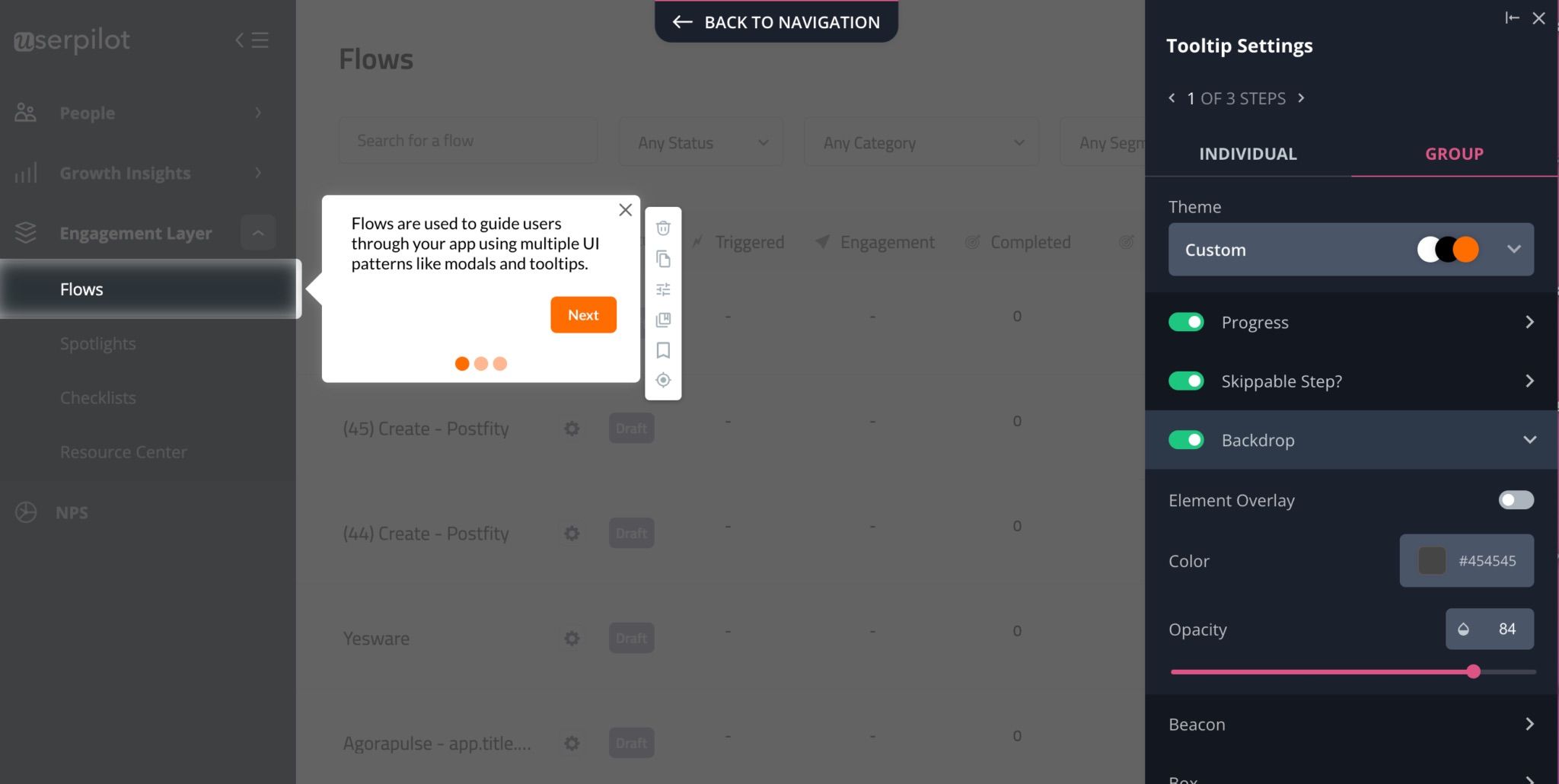
Early interactions shape whether users stay. AI enables exchanges to adjust guidance based on observed behavior as a marketing strategy to attract customers. Contextual prompts and short explanations appear when users hesitate or repeat the same action, reducing frustration during the first sessions.
An example of adaptive onboarding, using contextual prompts to guide users through core flows as they interacted with the product | userpilot.com
This form of guidance supports learning without interrupting flow, allowing users to progress at their own pace while staying engaged with the product.
How does this affect retention?
AI-driven personalization reduces uncertainty. Users spend less time interpreting interfaces and more time acting with clarity. When decision support feels consistent and relevant, users are more likely to return and rely on the platform over time.
Growth comes not from automation alone, but from systems that help users make better choices with less effort, reinforcing trust through everyday use rather than promises.
Key takeaway: Exchanges learn how to get customers to stay by using AI to reduce decision overload early, guiding users toward clear, confident actions that increase first-session success and encourage long-term reliance on the platform.
Conclusion
Exchange growth in 2026 is driven by how well a product fits into everyday user behavior when teams think deliberately about how to attract new clients, not just how to generate short-term interest. Retention depends on trust, clarity, and consistent usability, not on promotional mechanics or short-term incentives.
Platforms that integrate trading with broader functionality see stronger engagement. Frictionless onboarding, clear UX, and access to familiar asset classes encourage users to stay and return, even when markets are inactive. These approaches reflect how leading exchanges already operate.
The most effective next step is focus. Improving one core area often delivers more impact than adding new features. Exchanges that prioritize reliability and continuity become products users rely on, which naturally helps them attract new clients over time, rather than being services users visit only occasionally.
A practical comparison of the best Ethereum APIs in 2026, covering RPC access, wallet and token data, transaction history, L2 support, pricing models, and in-app swap functionality.
How Crypto Wallets Make Money: Key Revenue Models Explained
Building or scaling a crypto wallet? Analyze the key revenue models — from exchange APIs to staking — and discover what really drives revenue growth in today's market



 Office of the Comptroller of the Currency and
  A structured Discord support flow where users submit issues via tickets, enabling faster response, clearer context, and more predictable issue resolution | topstep.com
 An example of adaptive onboarding, using contextual prompts to guide users through core flows as they interacted with the product | userpilot.com