Welcome to the ChangeNOW Blog, Here we focus on research, real use cases, and practical insights, not hype. While we double-check our facts, nothing here should be taken as financial advice; crypto is a high-risk space, and your own research always matters.
A developer-friendly crypto API defines how crypto products are built and monetized. These systems sit under almost any crypto business you know.
Market data layers supply pricing feeds, while wallet stacks manage keys, balances, and signing. The execution layer offloads swaps, routing, liquidity aggregation, and settlement tracking. Teams choose between custodial models with high regulatory friction or non-custodial systems that prioritize asset sovereignty, routing, and liquidity depth.
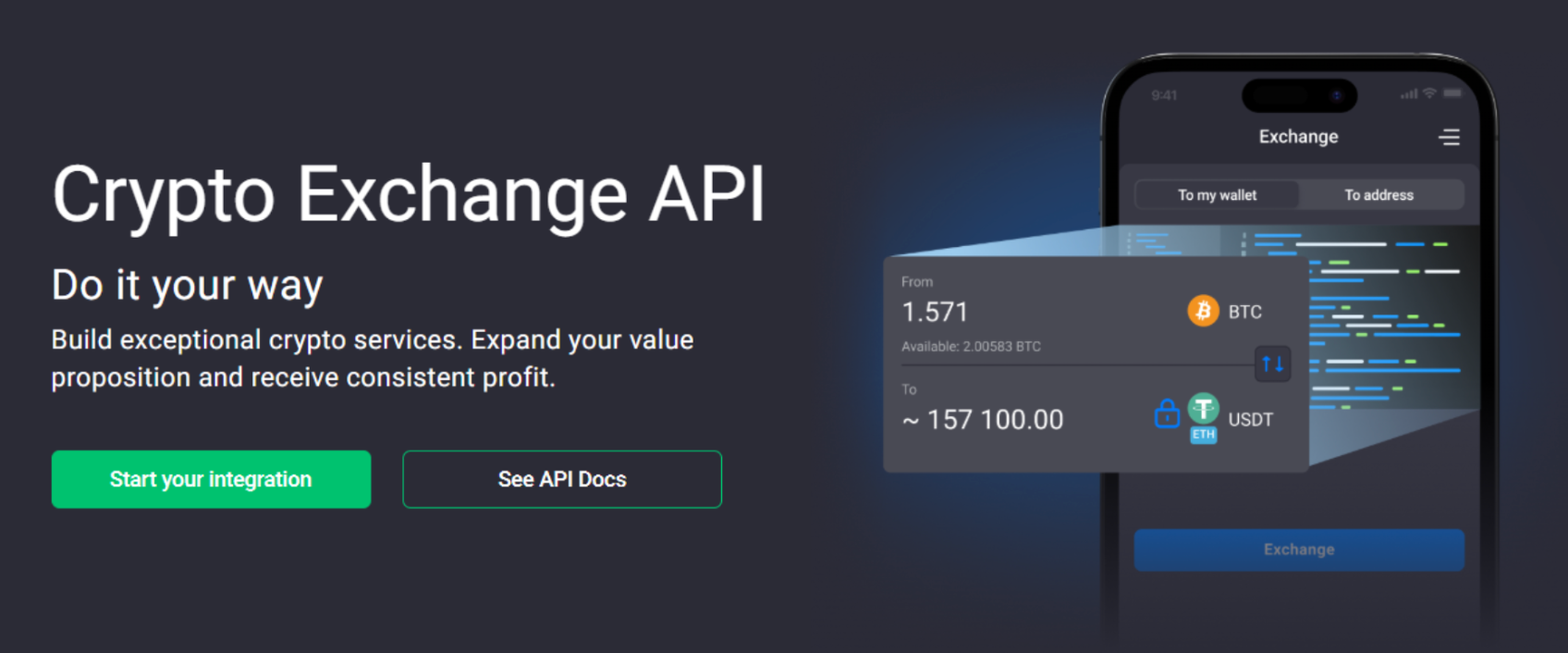
Based on our analysis, ChangeNOW API is the best crypto API for developers who need embedded swaps without building routing, liquidity aggregation, and settlement logic from scratch. It also fits the best blockchain API category for products that require non-custodial execution across 1,500+ assets and 110+ networks through a single integration. The platform aggregates liquidity, supports fixed or floating rates, removes node maintenance, and keeps transaction volume inside the product.
Skipping these systems forces teams into manual node management, routing logic, monitoring, and error handling, bloating development cycles and creating inconsistent execution.
The List Of The Best Developer-Friendly Crypto APIs
ChangeNOW
CoinStats
CoinAPI
NOWPayments
NOWNodes
Alchemy
The Graph
Etherscan
Chainlink
Binance
WalletConnect
Web3.Storage
How Do We Select The Best Solutions
Choosing the best blockchain API fixes your infrastructure debt. Evaluate Web3 API providers through operational metrics rather than marketing promises.
Key Features
Features dictate your product's technical ceiling. Monitor uptime, fiat availability, webhook latency, and liquidity depth. Avoid integration bloat that stalls roadmaps, limits functionality, or restricts market share. Define these technical boundaries before writing code.
Commissions
Fee models control unit economics. Fixed rates and volume tiers impact margins differently during scaling. Audit maker-taker splits, withdrawal minimums, spread markups, and gas routing to stop profit drain. Locate where margins disappear during peak market volatility.
Use Cases
Retail stacks fail in B2B environments. Match infrastructure to commercial reality. Verify capacity for high-frequency microtransactions, corporate treasury swaps, tokenized issuance, and batch payouts. Avoid architectures that cannot handle your specific transaction profile.
Algorithmic trading systems, institutional research, and price trackers.
NOWPayments
Infrastructure for accepting 350+ cryptocurrencies; mass payouts; recurring billing; stablecoin optimization.
0.5% for single-currency transactions; 1.0% if a swap is required; no charge for custodial payouts.
E-commerce, global payroll, iGaming platforms, and B2B services.
NOWNodes
Instant access to 100+ blockchain networks; 0.8s average response speed; WSS for real-time tracking.
Credit-based pricing; 1 million requests free; paid plans starting at $49/month.
Wallet balance checks, DeFi protocol scaling, and NFT marketplace verification.
Modern Web3 products depend on several infrastructure layers working together. Execution, network access, transaction tracking, market connectivity. Integrating ChangeNOW for swaps and NOWNodes for RPC access removes part of the operational burden early. Teams don’t spend months maintaining routing systems or running node infrastructure themselves.
ChangeNOW routes swaps through liquidity from centralized and decentralized providers without taking custody of user assets. Private keys stay with the user throughout the transaction flow. For product teams, the main value is the amount of infrastructure they do not have to build. Swap logic, routing, liquidity access, backend scaling, node maintenance, protocol updates, and error handling sit outside the core product.
As an API for Web3 integrations, ChangeNOW supports 1,500+ assets across 110+ networks, with 99.99% uptime and 350ms response times.
Fixed-rate swaps give users price certainty before they confirm the transaction. Floating-rate swaps follow live market movement, which fits flows where teams want market-driven execution instead.
Key Features
ChangeNOW connects swaps to CEX and DEX liquidity across 1,500+ assets and 110+ networks, giving products broad cross-chain execution without building their own routing layer.
Clear crypto API documentation with integration-ready endpoints, examples, and implementation guidance for faster deployment.
Automates node maintenance, protocol upgrades, backend scaling, and error handling.
Generates unique deposit addresses for every transaction to protect user privacy.
Fees & Commissions
Partners capture a 0.4% baseline revenue share on every transaction. The dashboard allows for fee customization based on specific assets, trading pairs, user tiers, or volume milestones. Profit withdrawals are processed instantly in fiat or 11 selected cryptocurrencies to ensure capital flexibility.
Use Cases
Multi-currency wallets require swap modules and fiat ramps.
A leading blockchain API for DeFi projects that need deep liquidity and complex cross-chain routing logic.
Portfolio trackers monetizing high-intent user traffic through embedded exchange tools.
Media platforms or dApps implementing direct crypto top-ups for global audiences.
Verdict
ChangeNOW removes the overhead of maintaining internal capital reserves while providing instant cross-chain swap and fiat processing. All transactions settle directly in the user’s wallet using unique deposit addresses to maximize security and auditability.
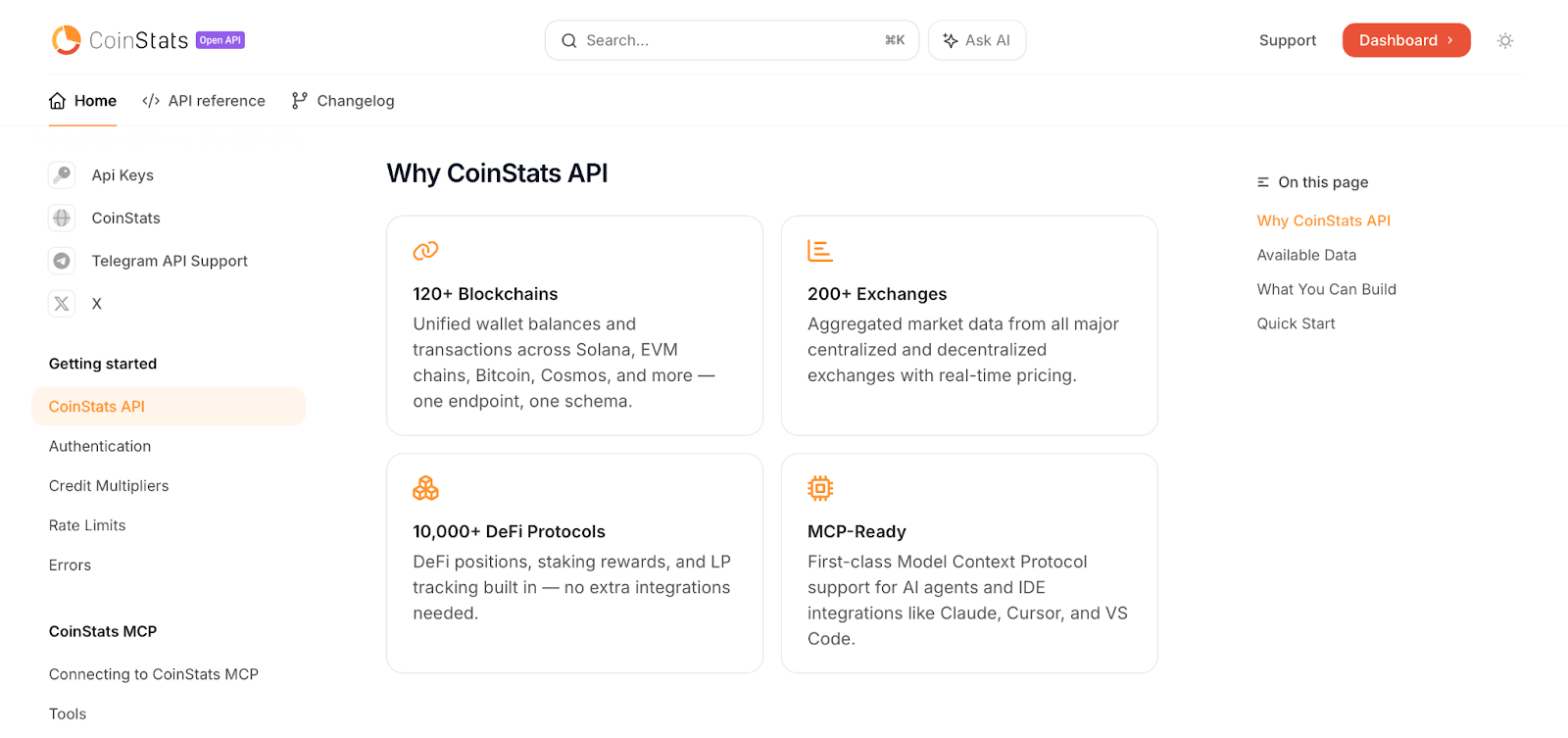
The CoinStats API pulls wallet and exchange data into the same product layer. As a Web3 data API, it brings activity from 120 blockchains and 200 exchanges through one connection instead of dozens of separate integrations.
Developers use a single API key to read balances, transaction history, and open positions across Bitcoin, Solana, Ethereum, and EVM networks. The value is practical: less data plumbing, fewer fragmented sources, faster portfolio and tracking features.
Key Features
Unified schema for cross-chain balance, transaction, and wallet history data.
DeFi position tracking for staking, lending, liquidity pools, and yield farming.
MCP (Model Context Protocol) server for native AI agent and IDE integration.
Access to 100,000+ assets with real-time market pricing and metadata.
Fees & Commissions
The pricing follows a credit-based model where costs scale with query complexity. Basic requests carry a standard cost, while multi-chain queries for deep DeFi data utilize higher multipliers. A free tier supports initial development and testing phases. This structure ensures costs align directly with the volume and depth of data retrieved.
Use Cases
Cross-Chain NFT Data Aggregation: Serves as a specialized solution for developers seeking NFT APIs with native multi-network support. It streamlines the retrieval of collection metadata, floor prices, and individual holdings, allowing teams to build cross-chain marketplaces and galleries.
Portfolio management apps track P&L, historical performance, and asset allocation.
AI chatbots using the MCP server for conversational on-chain data retrieval.
Tax platforms are pulling comprehensive transaction histories for cost-basis reporting.
Verdict
CoinStats is a specialized data engine for builders requiring immediate multi-chain visibility. It is a strategic choice for AI-driven fintech tools and tracking applications that do not involve native execution or swaps.
CoinAPI
Overview
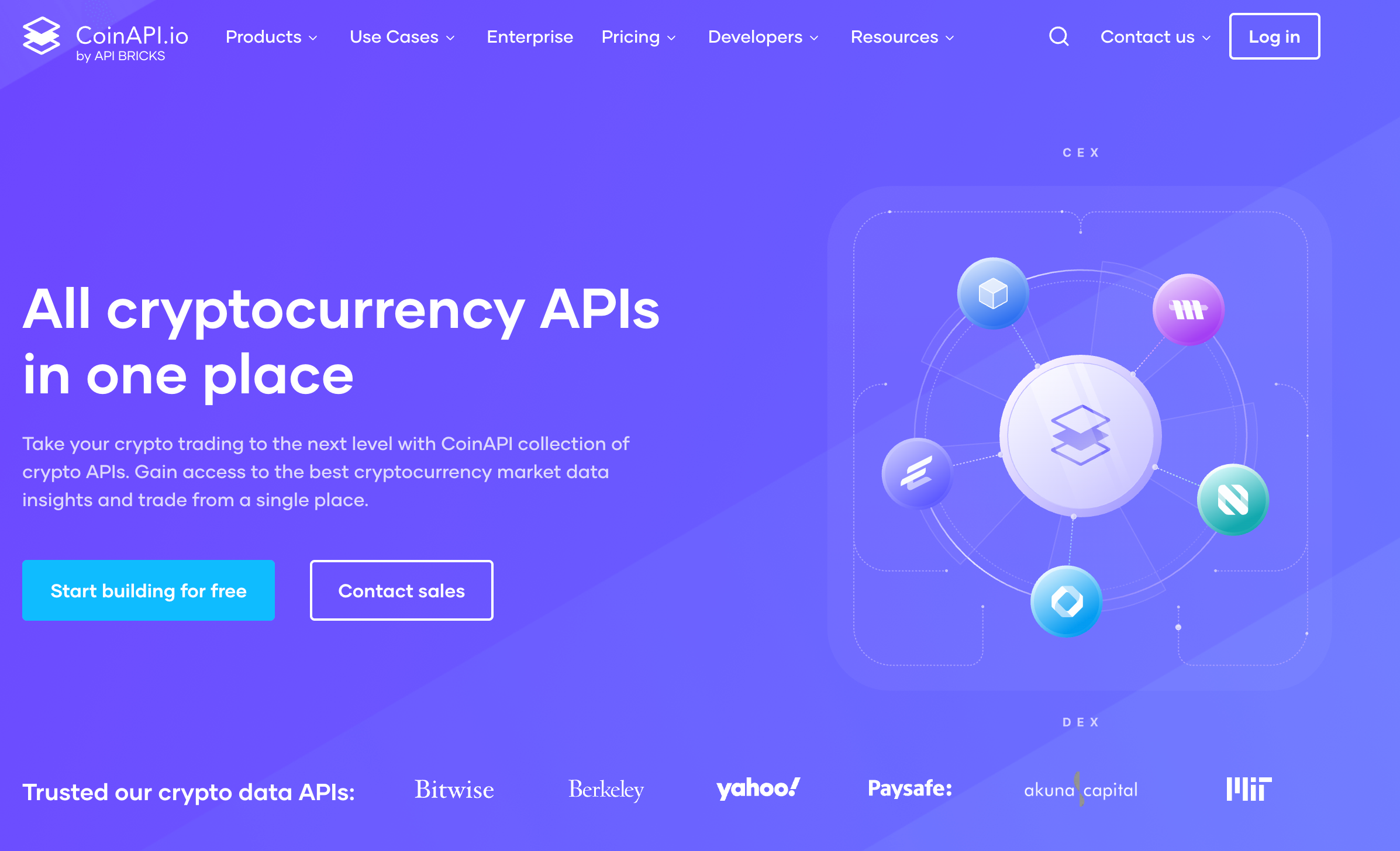
CoinAPI provides a standardized entry point for market data across 400 exchanges through REST, WebSocket, FIX, and flat-file protocols. The infrastructure normalizes disparate symbol formats and data structures into a predictable schema. Integration removes the technical debt associated with maintaining dozens of individual exchange connections. This system dictates the standard for teams requiring high-frequency updates, deep historical records, and exchange-grade consistency.
Key Features
Standardized schemas for global trade execution and order book snapshots.
Historical tick-level data for quantitative research and strategy backtesting.
Flat-file delivery for big data processing and institutional warehousing.
Native integration with SEC filings, prediction markets, and social sentiment feeds.
Fees & Commissions
Pricing utilizes a tiered, credit-based system. Free tiers support early testing, while enterprise tiers require custom contracts for high-volume, low-latency requirements. Costs scale based on request frequency and the granularity of the data retrieved from the 400 connected platforms.
Use Cases
Trading teams use the API for algorithmic strategies, arbitrage logic, and execution systems that depend on fresh market data.
Institutional users apply it to research workflows, quant models, and risk monitoring, where fragmented data creates noise.
Product teams build market dashboards, price trackers, and volatility tools without stitching together separate data sources.
Machine learning pipelines and predictive engines require clean historical inputs.
Verdict
CoinAPI handles the heavy technical lifting of market data normalization. It is a data bridge for institutions and quant teams requiring sub-second consistency across hundreds of platforms through a single integration.
NOWPayments
Overview
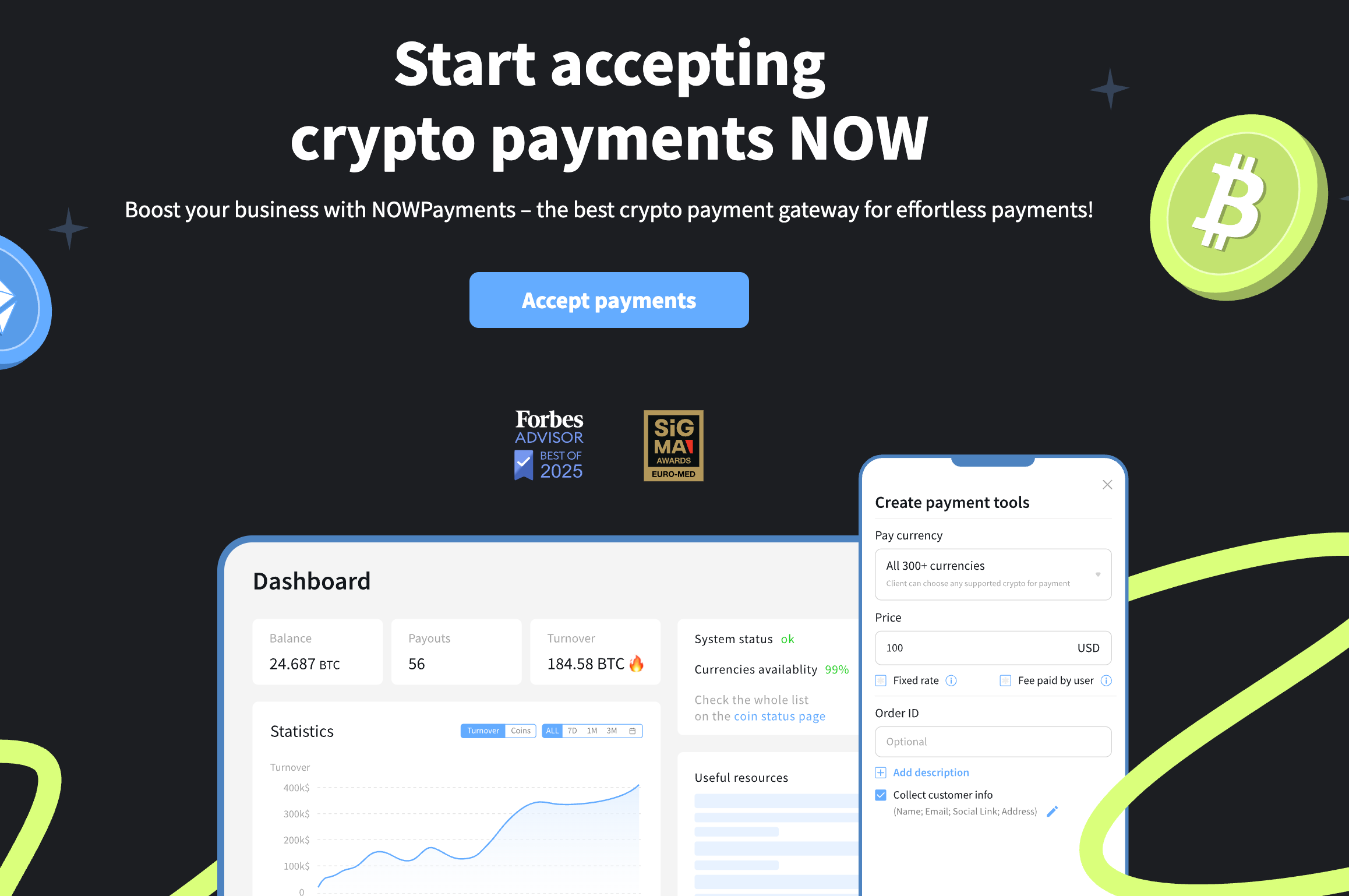
NOWPayments is a settlement rail for digital asset acceptance. The platform is a tool for merchants integrating stablecoins into standard business operations. Supporting 350+ cryptocurrencies, it targets e-commerce, iGaming, and B2B services seeking to bypass the delays of traditional bank transfers. The infrastructure converts blockchain finality into immediate business liquidity.
Key Features
Mass payouts for global teams, contractors, and affiliate networks.
Recurring billing modules for subscription-based business models.
Retail POS software for physical storefronts and terminal integrations.
Layer 2 support for micro-payments on Base, Arbitrum, and Polygon.
Fees & Commissions
Single-currency transactions carry a 0.5% service fee. Multi-currency payments involving a swap incur a 1.0% cost. Custodial payouts are exempt from service charges, requiring only the network gas fee. High-volume partners utilize custom revenue-share models to optimize operational margins.
Use Cases
Online retail and iGaming platforms require instant, borderless payment processing.
B2B services and global payroll systems are replacing slow fiat wire transfers.
Marketplaces seeking real-time settlement without the 3-5 day legacy banking delay.
Verdict
NOWPayments is a compliant gateway adhering to MiCA Articles 68 to 73. The platform processed stablecoin transactions on BSC and Ethereum with significantly reduced latency compared to previous settlement cycles.
NOWNodes
Overview
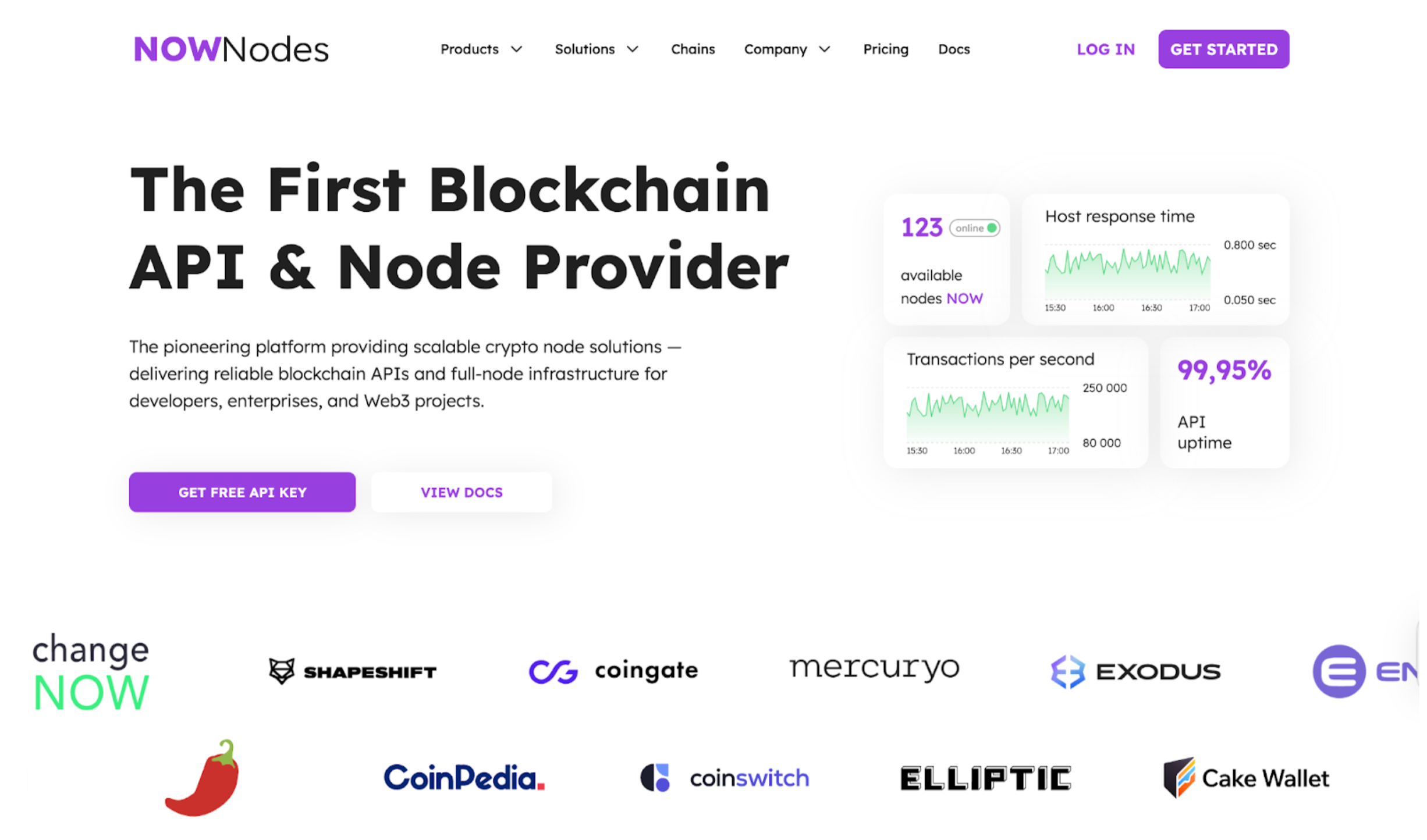
NOWNodes works as an API gateway for blockchain infrastructure, aggregating access to 100+ networks through a single RPC interface. Service is the solution for scaling dApps without the capital expenditure of physical hardware or private cluster maintenance. The infrastructure maintains 99.95% uptime with sub-second latency across Ethereum, Bitcoin, Solana, and Polygon. It provides a centralized command point for engineers managing multi-chain deployments and high-frequency data requests.
Key Features
A single API key covers 100+ blockchain networks and archival nodes.
WebSocket access gives products a live view of mempool activity. That layer matters for trading systems, transaction tracking, alerts, and execution-sensitive flows.
Node setup can match the workload instead of forcing one default configuration. Shared nodes fit lighter usage, while dedicated and high-availability nodes support heavier traffic or stricter uptime needs.
Mainnet and testnet access is especially useful for teams building across newer L2 environments. For that use case, NOWNodes fits the search for the best blockchain API options for mainnet and testnet access without locking the team into one network path.
For teams comparing the best blockchain API for mainnet and testnet access, NOWNodes is strongest where broad network coverage and flexible node setup matter. Developers can test and launch across multiple networks without locking the product into one chain path.
Internal load balancing keeps request handling steadier during congestion. The network can slow down; the product still needs predictable access to data underneath.
Fees & Commissions
Pricing utilizes a credit-based system. The free tier includes 1,000,000 requests per month for prototyping. Pro and Enterprise plans scale from $49 per month, with costs determined by total throughput and the number of dedicated instances required.
Use Cases
Crypto wallets require reliable balance checks and transaction broadcasting.
A leading blockchain API for DeFi projects on Solana and EVM chains that require high-speed RPC calls.
NOWNodes is a strong option if you need an RPC service for DeFi data on Solana. It supports Solana and EVM chains, offers high-speed RPC access, WebSocket tracking, and node setups that can scale from shared infrastructure to dedicated or high-availability nodes.
Multi-chain analytics platforms and block explorers.
NFT marketplaces verify on-chain ownership and metadata.
Cross-border payment gateways rely on real-time settlement confirmation.
Verdict
NOWNodes serves as a high-speed API gateway for blockchain access, eliminating the overhead of private server management. For those looking for an RPC service with enhanced API access for DeFi data on Solana, NOWNodes fits the infrastructure layer: fast balance reads, transaction status checks, live chain activity, and scalable node access without running private RPC infrastructure.
Alchemy
Overview
Alchemy functions as a comprehensive developer stack, moving beyond basic RPC to provide specialized endpoints for complex chain-state queries. The architecture utilizes a "Supernode" system to ensure data consistency and eliminate block re-org issues. While providing deep visibility into NFT metadata and transaction history, the platform introduces a degree of ecosystem dependency due to its proprietary toolset. Developers use the integrated Debug Toolkit and Mempool Visualizer to compress troubleshooting cycles during production deployments.
Key Features
For teams asking which RPC providers offer enhanced APIs specifically tailored for NFT data, Alchemy is the clearest fit in this list. It moves beyond basic RPC access with dedicated NFT endpoints for metadata retrieval, ownership records, and transfer history indexing, which makes it useful for NFT marketplaces, wallets, and gaming products.
Gas Manager for ERC-4337 implementations, enabling sponsored transactions.
Token API for multichain balances, pricing, and historical asset flow.
Alchemy Build for no-code chain state visualization and automated testing.
Custom Webhooks (Address Activity, Dropped Transactions) for instant alerts.
Fees & Commissions
Costs are calculated using Compute Units, where complex queries consume more credits than standard JSON-RPC calls. A free tier is available for initial development. Enterprise pricing scales dynamically based on CU volume and the utilization of advanced Account Abstraction (AA) features.
Use Cases
NFT marketplaces require instant metadata and ownership verification.
DeFi protocols implementing gas-less user experiences via ERC-4337.
Institutional-grade wallets require deep transaction debugging and simulation.
Yield aggregators monitor real-time pool statistics and rebalancing events.
Verdict
Alchemy is the leading data layer for teams requiring granular visibility into the chain state. Its Gas Manager is essential for modern ERC-4337 implementations, though the proprietary nature of its API requires careful architectural planning.
The Graph
Overview
The Graph operates as a decentralized indexing protocol, transforming raw blockchain event logs into searchable data models. Developers deploy "subgraphs" using GraphQL schemas to define how smart contract entities map to accessible databases. This removes much of the indexing work from the product team. Developers can query structured on-chain data through GraphQL instead of building custom crawlers or maintaining private indexing servers. In that role, The Graph works as a web3 data API for historical blockchain activity.
Key Features
Custom indexing logic via GraphQL schemas and mapping manifests.
Full-text search capabilities for complex on-chain metadata.
Time-series data aggregation for historical snapshots and daily volume metrics.
Decentralized query resolution ensures censorship resistance and uptime.
Native support for 40+ chains, including Ethereum, Arbitrum, and NEAR.
Fees & Commissions
The hosted service provides a free tier for development. Production-grade queries on the decentralized network are paid in GRT tokens. Fees are determined by the query volume and the specific processing requirements of the network indexers, aligning costs with actual data consumption.
Use Cases
DAO governance portals tracking voting history and proposal states.
NFT rarity trackers and marketplace analytics dashboards.
DeFi yield platforms monitor historical liquidity and pool performance.
Social dApps index user interactions and content metadata.
Verdict
The Graph is the industry standard for complex Web3 data indexing. While it requires specific GraphQL expertise and manual event mapping, it provides the most reliable path to searchable, high-fidelity on-chain data.
Etherscan
Overview
Etherscan is the definitive data gateway for teams requiring a direct window into blockchain state. The Version 2 infrastructure consolidates 50+ networks, including Ethereum and Arbitrum, under a unified rate-limit framework. While the API verifies contract ABIs and internal traces, it also works as the source for gas price volatility data. Access is streamlined through a single API key, making data handling predictable across various L2 environments.
Key Features
Unified access is available for Ethereum and 50+ sidechains.
The system verifies contract ABIs and fetches internal transaction traces.
Gas metrics and network congestion data are real-time.
Tools facilitate bulk data export for forensic and historical research.
Verified source code and metadata are accessible via simple endpoints.
Fees & Commissions
The free tier is a standard starting point, allowing 5 calls per second and 100,000 daily requests. PRO plans increase capacity to 30 calls per second while scaling daily volume to 1.5 million requests. Priority support is exclusive to paid tiers.
Use Cases
Compliance audits for complex regulatory reporting.
Wallets track balances for real-time portfolio management.
Developers verify smart contracts and debug execution errors.
Verdict
Etherscan is the industry benchmark for explorer-backed data accuracy. It remains a practical tool for audits where verified on-chain facts are the absolute priority.
Chainlink
Overview
Smart contracts cannot read external systems by themselves, so Chainlink brings off-chain data, API responses, and cross-chain messages into on-chain logic. The service handles the custom data step. A contract can request external data, run serverless JavaScript, and receive the processed result back on-chain.
The result does not simply return as a raw API response. It is signed before it goes back on-chain, which gives the contract a verifiable data path.
REST and WebSocket connectivity sit behind the Chainlink Functions API. Price feeds cover market data where tampering risk matters. CCIP handles cross-chain messaging when applications need to move information or value between networks.
For broader connectivity, Chainlink Functions supports REST APIs, while Custom Adapters handle WebSockets. Price feeds and CCIP cover the heavier use cases: tamper-resistant market data and cross-chain messaging.
Key Features
Framework manages off-chain execution and data logic.
VRF is the standard for provably fair gaming and NFT mints.
The network provides Price Feeds for high-frequency asset valuation.
Staking models are essential for ensuring node operator security.
CCIP facilitates secure cross-chain data and asset transfers.
Fees & Commissions
Payments are mandatory in LINK tokens. Costs cover node operator rewards and the gas required for on-chain delivery. Fees scale dynamically based on update frequency and the number of oracles involved in a single feed.
Use Cases
DeFi protocols automate lending and liquidation cycles.
NFT marketplaces require VRF for dynamic metadata updates.
Insurance dApps fetch weather or flight data for automatic payouts.
Supply chains rely on verifiable data for real-time asset tracking.
Verdict
Chainlink is the standard for secure data oracles. Integration demands technical proficiency and consistent management of LINK token balances.
Binance
Overview
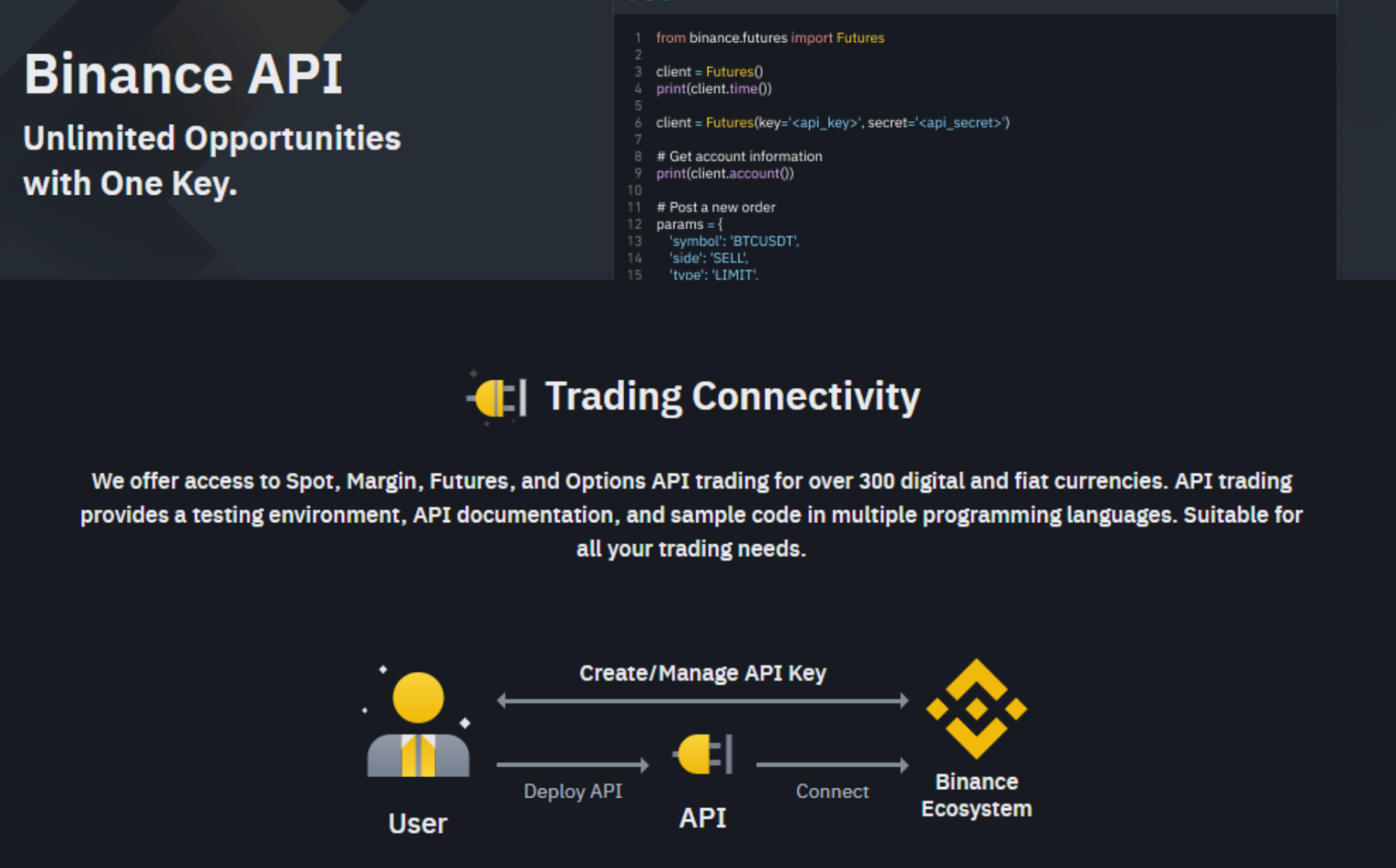
Binance stands among the best crypto trading APIs for centralized liquidity and professional trade execution. The architecture manages spot, margin, futures, and options markets through high-throughput REST and WebSocket protocols. Institutional teams often prefer the FIX 4.4 interface for its low-latency characteristics and direct connectivity. The system is the primary entry point for deep order books, delivering private data updates and market feeds in sub-second cycles.
Key Features
REST endpoints handle account management and order placement.
WebSockets are the source for real-time market depth and ticker updates.
The FIX 4.4 interface executes institutional high-frequency orders.
Margin logic is flexible, supporting both cross and isolated modes.
Sub-accounts facilitate internal liquidity routing and asset management.
Fees & Commissions
Costs follow a tiered maker-taker structure. VIP levels reduce expenses based on 30-day volume and BNB holdings. Rate limits are aggressive, requiring precise optimization for algorithmic strategies.
Trading bots manage portfolios across multiple spot and futures pairs.
Market makers provide liquidity using institutional-grade sub-accounts.
Brokerages use Binance as a backend execution layer.
Verdict
Binance is the standard for high-volume centralized access. Utilizing this API involves custodial risk and necessitates a strict watch on regional compliance shifts.
WalletConnect
Overview
WalletConnect gives wallets and dApps a shared connection layer. It is open-source, and the user does not have to move private keys into the browser to interact with an application. The connection usually starts with a QR code or deep link. Signing stays inside the wallet. The dApp can request an action, but it never gets direct access to the keys.
This architecture is close to the standard for transaction signing across hundreds of providers. It maintains broad compatibility, ensuring that applications stay accessible to users on MetaMask, Rainbow, or Trust Wallet without custom backend logic.
Key Features
Decentralized message relay for secure, end-to-end encrypted signing.
Support is universal for EVM, Cosmos, Solana, and Polkadot ecosystems.
Push notifications trigger real-time alerts for pending transaction requests.
Web3Modal is a ready-to-use toolkit for rapid frontend integration.
Session persistence manages long-term user connections across dapp restarts.
Fees & Commissions
The core protocol is free and remains fully open-source. Teams often utilize WalletConnect Cloud for managed infrastructure, where a free tier is available for early-stage development. Production environments with high traffic scale into paid tiers. Costs are variable, reflecting daily active users (DAU) and total relay volume.
DeFi dashboards connect wallets for liquidity provision and swaps.
NFT platforms verify ownership without requesting seed phrases.
Blockchain games handle in-game assets via mobile-linked accounts.
Governance portals authenticate DAO members for on-chain voting.
Verdict
WalletConnect is the reliable bridge for mobile user acquisition in Web3. Integration success dictates the user experience, though it requires careful management of session timeouts and wallet performance.
Web3.Storage
Overview
Web3.Storage moves decentralized file storage behind a hosted interface. Teams still use IPFS and Filecoin, but they do not have to maintain private storage clusters themselves.
The web3 storage API is REST-based, so developers can upload assets through a familiar integration path. Each file gets a Content Identifier, which ties the asset to its content instead of a central server location. This helps when data needs to outlive one backend or stay available under censorship pressure. It is not the fastest retrieval layer by default. The fit is stronger for products where permanence and data integrity matter more than raw speed.
Key Features
Content-addressing is the core logic, utilizing unique CIDs for every upload.
The system distributes data automatically across the global Filecoin network.
REST endpoints facilitate seamless file uploads and metadata retrieval.
Cryptographic proofs verify data storage and long-term integrity.
Native support is standard for Content Addressable Archives (CAR) files.
Fees & Commissions
A free tier exists for small projects and initial testing phases. Paid subscriptions carry fixed monthly costs, while extra charges apply for high bandwidth or storage volume. Pricing is stable, but it tracks the underlying economics of the Filecoin storage market. The credit system manages high-throughput needs for enterprise clients.
Use Cases
NFT platforms store high-resolution art, metadata, and media files.
Decentralized social media archives user-generated content permanently.
Governance portals and DAOs secure legal records and proposal documents.
Research institutions preserve data and academic papers via verifiable proofs.
Developer tools host source code and immutable build artifacts.
Verdict
Web3.Storage is a practical layer for permanent data archiving. It lacks the sub-second speed of traditional CDNs, so CID persistence is a critical task for production-grade applications.
Conclusion
These 12 tools are the infrastructure of the 2026 decentralized economy. They eliminate the need for private server farms and manual node maintenance. Product teams use an API for Web3 integrations to bridge the technical gap between legacy web services and blockchain networks. The right combination dictates the success of your deployment. Strategic selection helps teams launch products that are secure, scalable, verifiable, and compliant.
FAQ
Most Web3 API providers have a free entry point. It works for early testing, first integrations, and MVP builds. It usually stops being enough once the product sees real traffic, where request limits, uptime, and pricing rules become harder constraints. Alchemy can cover early development with daily request limits, including sandbox work. ChangeNOW follows a different cost model: teams can add exchange features with zero upfront cost and monetize through transaction fees instead of paying a fixed monthly subscription. These crypto API free options reduce the cost of getting started.
For a simple NFT website, start with the API that removes the most indexing work. Alchemy is the easier pick if your first version is mostly Ethereum-based: it covers NFT metadata, ownership, and transfer history without making you parse raw logs. CoinStats fits a different case, which starts making sense once the NFT site moves beyond one chain. Address lookups, gallery views, and cross-chain ownership data become part of the product. Alchemy and CoinStats are both useful APIs for developers, but they solve different first-release problems. One is cleaner for Ethereum-first builds. The other fits broader NFT coverage.
For a multi-chain app, the split usually comes down to what you want to avoid building yourself. If the product needs cross-chain value transfers, a provider like ChangeNOW can handle routing, liquidity, and execution through one integration. That is cleaner than building custom bridges for every network. Specialized providers make sense when one part of the stack needs tighter control: a specific chain, a specific data layer, or a performance requirement the unified provider does not cover.
External Web3 APIs usually break in a few places first: downtime, rate limits, delayed data, or stale responses during chain reorgs. Production apps cannot treat those as edge cases. That is where reliable Web3 APIs for apps matter: strong uptime records, clear limits, and fallback logic around the parts of the flow that cannot fail. ChangeNOW’s 99.99% uptime is useful in that context, but redundancy still has to be designed into the product.
This guide explores top crypto exchange with API solutions, from free cryptocurrency options to advanced services. Learn how crypto for business can scale with altcoin APIs, integrate with Web3 platforms, and unlock blockchain business opportunities.


 Overview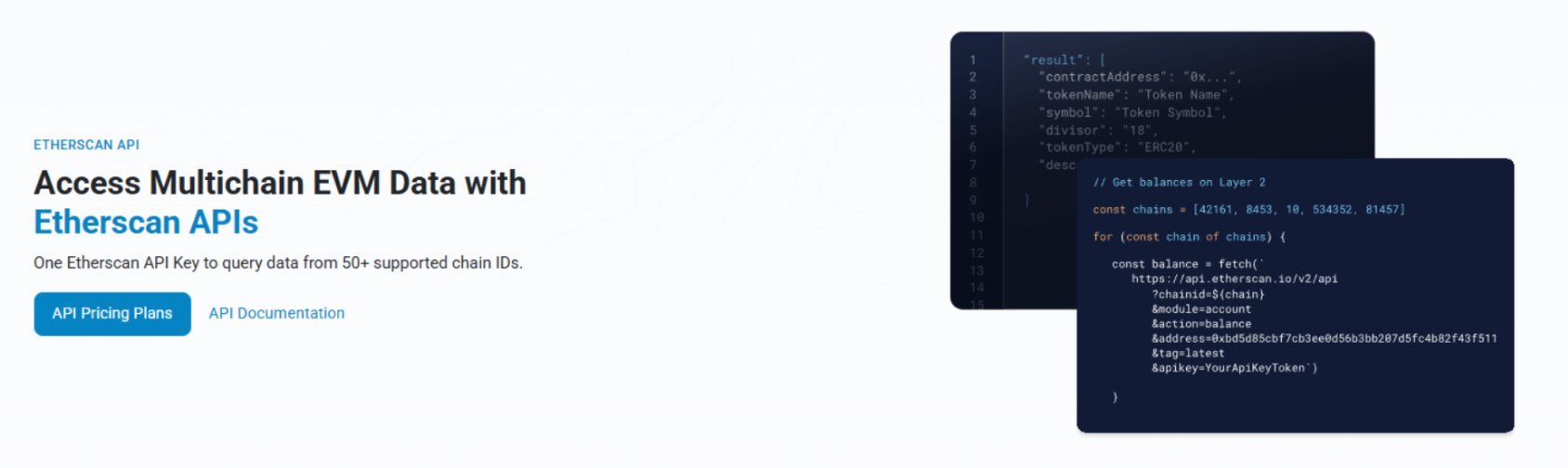
 Overview